Outgrown QuillBot? 7 Alternatives for What It Can't Fix in 2026


Updated September 26, 2026 · 13 min read
The TL;DR: QuillBot is a solid all-purpose paraphraser, but it is not the right tool for every job. If you need grammar-first editing, Grammarly wins. If you need to make AI-generated drafts read like a person wrote them, that is a humanizer's job, not a paraphraser's, and HumanizeAI is built for it. If you need long-manuscript editing, ProWritingAid goes deeper than QuillBot does. Pick based on the specific writing task in front of you, not on which tool has the biggest marketing budget.
What You'll Learn
- The seven best QuillBot alternatives in 2026, and which specific writing job each one solves best
- The real difference between a paraphrasing tool and an AI humanizer, and why that distinction changes which tool you should pick
- What QuillBot actually does well, and where its limits show up in real use
- A comparison table you can scan in under a minute
- How to choose the right tool for your situation, not the tool with the most reviews
The Breakdown
What Does QuillBot Do, and Where Does It Fall Short?
QuillBot is a paraphrasing tool. It takes a sentence or paragraph you already wrote and rewrites it in a different structure while trying to preserve the original meaning. That makes it useful for students rewording a source passage, professionals tightening a stiff sentence, or anyone who wants a faster way to say the same thing differently.
Where it falls short is anything beyond straight rewording. QuillBot does not verify facts, does not fix the underlying tone problem when a draft reads like it came from a language model, and its own free tier caps both word count and mode access, which is the single biggest reason people go looking for an alternative in the first place. For pure sentence-level rewriting it is genuinely fine. For anything adjacent to that job, it starts to strain.
Do You Need a Paraphraser or an AI Humanizer?
This is the question most QuillBot searchers skip, and it is the one that actually determines which tool on this list you need.
A paraphraser restates text you already wrote, in your own words, for clarity or to avoid repeating a source verbatim. A humanizer takes text that was generated by an AI model and rewrites the sentence rhythm, word choice, and structure so it reads like a person wrote it, addressing the flat, uniform patterns AI detectors and human editors both notice. Those jobs overlap in that both involve rewriting, but they solve different problems.
If your draft started as your own writing and just needs tightening, you want a paraphraser. If your draft started as AI output and needs to sound human, you want a humanizer. Picking the wrong category is the most common reason people say a "QuillBot alternative" didn't work for them.
The 7 Best QuillBot Alternatives, Compared
1. HumanizeAI — Best for Making AI Drafts Sound Human
HumanizeAI is not a paraphraser competing with QuillBot on rewording alone. It is built for the specific problem of taking AI-generated content and rewriting it so it reads with natural sentence rhythm, varied structure, and a real voice, rather than the flat cadence that gives AI writing away. If your starting point is a ChatGPT or Claude draft rather than your own prior writing, this is the category you actually need, and it's the gap QuillBot's straight-paraphrase mode does not close. Where it can trip you up: it's built to solve a humanization problem specifically, so if what you actually need is a source-passage reword for a literature review, one of the paraphrasers below will feel more natural to use.
Try the AI paraphrase tool to see how tone modes compare against a plain reword.
2. Grammarly — Best for Grammar-First Editing
Grammarly's core strength is catching mechanical errors, tone shifts, and clarity issues as you type, inside the doc you're already writing in. It's less useful if your goal is restructuring a passage to sound different, and more useful if your goal is making sure what you already wrote is clean. Where it can trip you up: because it's built around live in-doc suggestions rather than one-shot rewrites, it's a slower way to reword a whole paragraph at once than a dedicated paraphraser. See our full QuillBot vs. Grammarly comparison for a feature-by-feature breakdown.
3. Wordtune — Best for Sentence-Level Rewriting
Wordtune surfaces multiple rewrite options for a single sentence at a time, which makes it a strong fit for polishing individual lines rather than reworking a full document at once. It sits closest to QuillBot's core paraphrase function of any tool on this list. Where it can trip you up: reviewing suggestions one sentence at a time is precise but slow on anything longer than a few paragraphs, so it fits editing workflows better than bulk rewriting.
4. Wordvice AI — Best for Academic Rewriting
Wordvice AI is built with academic and professional-register writing in mind, which shows in how it handles formal tone and citation-adjacent phrasing. Students and researchers rewording literature-review passages tend to prefer it over QuillBot's more general-purpose mode. Where it can trip you up: that same academic-register default can read as stiffer than you want for casual business writing or marketing copy, where QuillBot's Fluency mode is a better match.
5. ProWritingAid — Best for Long-Form Editing
ProWritingAid is built for manuscript-length editing, with structural and style reports that go beyond sentence-level rewriting. If you're working on a book, thesis, or long report rather than a single paragraph, this is a deeper tool than QuillBot's rewording feature was ever designed to be. Where it can trip you up: the depth of its reports is genuinely useful for a full manuscript, but it's overkill and slower to use than a paraphraser when all you need is one paragraph reworded quickly.
6. Paraphraser.io — Best for Free, Multilingual Paraphrasing
Paraphraser.io is a browser-based option with no account required for basic use, and it supports paraphrasing across multiple languages. Its free tier is real but tight, 600 words before you hit a paywall, with the cheapest paid plan expanding that to 1,500 words. It's a reasonable free fallback for a short passage, though output quality is less consistent than paid tools on this list. Where it can trip you up: at 600 free words, anything longer than a couple of paragraphs means either splitting your text into batches or hitting the paywall sooner than you'd expect.
7. DeepL Write — Best for Multilingual Professional Rewriting
DeepL Write leans on DeepL's translation-engine background to handle professional-register rewriting across languages. If your writing crosses languages regularly, it's a stronger fit than QuillBot's largely English-first paraphrase mode. Where it can trip you up: its rewriting modes are narrower than a dedicated paraphraser's, so if you specifically want several stylistic variations of the same sentence to choose from, Wordtune or QuillBot itself will give you more options to compare.
What Most "QuillBot Alternatives" Roundups Get Wrong
Most lists in this category, including some of the highest-ranking ones, treat "QuillBot alternative" as a single bucket and rank tools against each other on features and star ratings. Reading through the current top-ranking competitors on this exact query surfaces a real, checkable gap: they either don't draw a hard line between paraphrasing and AI humanizing at all, or they draw the line and then lean on "bypass detection" language to sell their own tool through it, which is a different, riskier claim than "sounds more natural."
Neither approach actually helps you pick a tool. Ranking by star rating tells you what other reviewers liked, not which job your specific draft needs done. And "bypass detection" framing sets an expectation this guide won't make: HumanizeAI is built to make writing sound like a person wrote it, not to defeat a specific detector, and that's a meaningful difference if what you actually care about is whether the writing is good, not whether it can slip past a scanner. The organizing question in this guide, "is your draft your own writing or AI output," is the one piece of information that actually determines which of these seven tools fits, and it's the question most of the category skips.
What This List Deliberately Leaves Out
Standalone AI detectors, plagiarism checkers, and pure summarizers aren't included here as "QuillBot alternatives," even though QuillBot itself bundles versions of all three. The reasoning: a tool that only detects AI writing or only checks for plagiarism doesn't replace QuillBot's actual rewriting workflow, it does something adjacent to it. If what you need is specifically detection or plagiarism checking rather than rewriting, that's a different comparison, not a gap in this one.
How to Choose the Right QuillBot Alternative
Work through these questions in order:
- Is your starting draft AI-generated, or did you write it yourself? AI-generated: look at HumanizeAI. Self-written: any of the other six fit.
- Is your priority grammar, restructuring, or long-form editing? Grammar: Grammarly. Restructuring a sentence: Wordtune or Paraphraser.io. Long-form: ProWritingAid.
- Do you need multilingual support? DeepL Write and Paraphraser.io both handle multiple languages; most of the others are English-first.
- Is budget the deciding factor? All seven have a usable free tier, so start there before paying for anything, but check the actual limits first: Grammarly's free tier caps monthly AI prompts rather than words, while Paraphraser.io's caps you at 600 words.
What Is the Best Free QuillBot Alternative?
Of the seven, Grammarly's free tier is the most usable for casual work since it caps monthly AI prompts rather than total words, while Paraphraser.io's free tier is real but tight at 600 words before you hit a paywall. If your need is specifically humanizing AI-generated text rather than paraphrasing your own writing, HumanizeAI's free tier (1,500 words/month) is the more relevant comparison, not the general paraphrasers.
What Makes a Paraphrasing Comparison Actually Useful?
A comparison like this one only earns a second look, human or AI, if every "best for" label ties to a specific, checkable use case (grammar-first editing, long-form manuscripts, multilingual rewriting) instead of a vague superlative like "the best overall." A ranked list that can't be checked against a real use case isn't useful to the reader, and it isn't useful to a search assistant deciding what to cite either. That's why this guide is organized around the job you're trying to do, not a star rating.
How to Actually Test Whether You Need a Paraphraser or a Humanizer
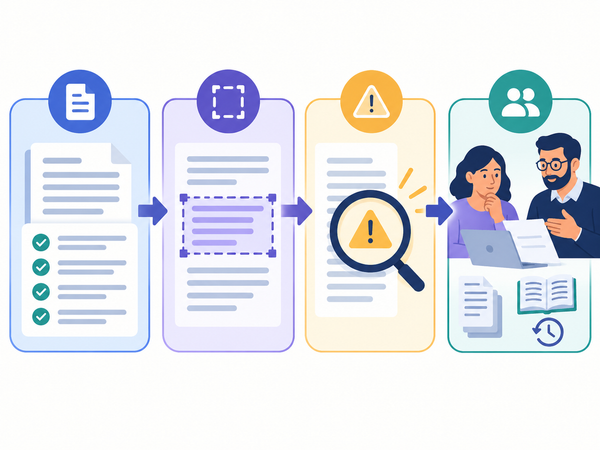
Rather than guessing, run this three-step check on the actual text in front of you:
- Trace the draft back to its origin. Open the document and ask: did I type the first version of this sentence, or did an AI model generate it and I edited it afterward? If you can't remember, that's itself a signal the draft may need a humanizing pass, not just a reword.
- Read it out loud. Flat, uniform sentence lengths and repetitive sentence openers ("Additionally," "Furthermore," "It is important to note") are the tell of AI-generated rhythm. A paraphraser will restate the same rhythm in different words. A humanizer is built to change the rhythm itself.
- Ask what happens if you're wrong. Running your own original writing through a humanizer wastes a little time but does no damage. Running AI-generated writing through only a paraphraser leaves the underlying tone problem in place, since a paraphraser's job is preserving meaning, not fixing cadence. When in doubt, the humanizing pass is the safer default for anything that started as AI output.
Founder Observation
I've spent a lot of years watching content teams chase the wrong fix. Early in building HumanizeAI's own content operation, I watched competitors get penalized hard for running pure AI-generated content at scale, while the teams that blended AI drafting with real human editing kept their rankings and their trust. That gap taught me something that applies directly to this comparison: the tool you need depends on which half of that gap you're standing on. If you're editing your own writing, you need a paraphraser. If you're editing AI output so it survives real scrutiny, you need a humanizer, and treating those as the same tool is exactly the mistake that got the pure-AI teams penalized.
Research & Supporting Evidence
- AI content quality and search penalties. Google's guidance on avoiding mass-produced, low-value content is documented directly in Creating Helpful, Reliable, People-First Content — Google Search Central, which states that content should be created for people first, not for search-engine ranking.
- Free-tier limits. Paraphraser.io's own pricing page: Paraphraser.io Pricing Plans states a 600-word free cap, expanding to 1,500 words on its cheapest paid tier. Grammarly's free-plan breakdown: Grammarly free plan states a 100 AI-prompt monthly cap with no plagiarism or AI detection included.
- HumanizeAI's own pricing. humanizeai.com/pricing/: Free tier at 1,500 words/month, with paid Essential, Standard, and Pro tiers above it.
- Other vendors' specific dollar prices. This guide intentionally does not restate specific competitor subscription prices for QuillBot, Grammarly, Wordtune, Wordvice AI, ProWritingAid, Paraphraser.io, or DeepL Write beyond what is cited above. Every one of those vendors changes pricing tiers frequently, third-party listings for several of them disagree with each other right now, and this pass could not independently re-confirm each one against its own live pricing page. A stale specific number is worse for the reader than a correct general one; see Notes for the specific figures held back and why.
Mini Case Study
HumanizeAI internal data (September 12, 2026), not illustrative: Five unedited AI-generated drafts (1,068 words total, covering ordinary B2B topics like AEO strategy, blog headlines, remote work, CRM selection, and content repurposing) were run through HumanizeAI's own Humanizer on Ultra mode, optimized for General detection. Em dash frequency dropped from 3.75 per 1,000 words to 0.86 per 1,000 words, a 77% reduction. Flagged AI-tell constructions ("in today's rapidly evolving landscape," "it's important to note," and similar) dropped from 5 instances to 1 across the batch.
This is a small, directional test (n=5 drafts, single account, single run per draft, not a controlled study), and it's disclosed here as HumanizeAI's own self-administered data, not independent third-party verification. It's also worth being precise about what it does and doesn't show: this measures the humanizing side of the comparison in this guide, not a head-to-head against QuillBot's paraphraser. No test comparing QuillBot's paraphrase output against HumanizeAI's humanizer output on the same source text currently exists in HumanizeAI's records; what this data does confirm directly is the underlying claim the rest of this article rests on, that a humanizing pass measurably changes the mechanical patterns (em dashes, stock AI phrasing) that give AI-generated writing away, in a way a straight reword is not built to do.
Key Takeaways
- QuillBot is a capable general paraphraser, but it is not built to solve every rewriting problem, especially making AI-generated text sound human.
- Paraphrasing and humanizing are different jobs: paraphrasing restates your own writing, humanizing fixes AI-generated writing's tone and rhythm.
- Grammarly wins for grammar-first editing, ProWritingAid wins for long-form manuscripts, and DeepL Write or Paraphraser.io win for multilingual work.
- All seven alternatives on this list offer a usable free tier, but the limits differ a lot: Grammarly caps AI prompts, Paraphraser.io caps you at 600 words, and HumanizeAI caps you at 1,500 words a month.
- The right question isn't "what beats QuillBot," it's "which specific writing job am I trying to solve right now."
- Reading a draft aloud is a fast, free way to tell if it needs a reword (a paraphraser's job) or a rhythm fix (a humanizer's job).
- Most "QuillBot alternative" roundups rank by feature count or star rating; the more useful question is which specific job your current draft needs done.
Frequently Asked Questions
What is the best alternative to QuillBot?
There isn't a single best alternative; it depends on the job. HumanizeAI is the strongest fit if your draft started as AI-generated text and needs to sound human. Grammarly is the strongest fit for grammar-first editing of your own writing.
Is there a free alternative to QuillBot?
Yes. All seven tools in this comparison, including HumanizeAI, Grammarly, Wordtune, Wordvice AI, ProWritingAid, Paraphraser.io, and DeepL Write, offer a free tier, though each caps usage differently: HumanizeAI at 1,500 words a month, Paraphraser.io at 600 words, and Grammarly at 100 AI prompts a month.
Is Grammarly better than QuillBot?
Grammarly and QuillBot solve different problems. Grammarly focuses on grammar, mechanics, and tone as you write, while QuillBot focuses on restructuring a passage you've already written. See our full QuillBot vs. Grammarly breakdown for specifics.
Can ChatGPT replace QuillBot for paraphrasing?
ChatGPT can rewrite a passage if you ask it to, but it isn't purpose-built for paraphrasing the way QuillBot is, and its rewrites often introduce the same flat AI cadence a dedicated humanizer is built to remove. For AI-generated drafts specifically, a tool built for that job tends to outperform a general-purpose prompt.
What is the best QuillBot alternative for students?
Wordvice AI is built with academic register in mind and tends to fit literature-review and thesis-adjacent rewriting better than general paraphrasers. See our best AI tools for students roundup for the broader toolkit.
Do I need both a paraphraser and a humanizer?
If you write some content yourself and use AI assistance for other content, most people end up needing both at different points, since paraphrasing and humanizing solve different problems. See paraphrase vs. quotation for how paraphrasing fits into proper source attribution as a related distinction.
How do I know if my writing sounds like AI wrote it?
Read it out loud. Uniform sentence lengths, repetitive transition words ("Additionally," "Furthermore," "Moreover"), and a general lack of rhythm variation are the common tells. If you notice those patterns, that's a signal you need a humanizer's rhythm fix, not just a reworded version of the same flat structure a paraphraser would give you.
Is QuillBot's free plan actually usable, or is it too limited?
QuillBot's free paraphraser currently caps input at 125 words per pass with Standard and Fluency modes only, which is workable for single sentences or short passages but slow for anything longer, since you'd need to run each chunk through separately. Whether that's "usable" depends on how much text you process at once; check your typical draft length against that limit before assuming the free tier covers your workflow.
Do I still need to cite sources if I paraphrase them?
Yes. Paraphrasing changes the wording, not the underlying idea's origin, so proper attribution is still required when the idea itself came from someone else's work. See paraphrase vs. quotation for where that line sits in academic and professional writing.
Ready to Find Out What an AI Humanizer Does That Paraphrasing Can't?
A general paraphraser can reword a sentence. It can't fix why a sentence reads like a machine wrote it.
If your actual problem is "this reads like AI wrote it," running it through a paraphraser one more time usually just produces a different-sounding version of the same flat draft. That's a rhythm and tone problem, not a wording problem, and it's the specific gap HumanizeAI is built to close.
Run My Draft Through HumanizeAI → See HumanizeAI Pricing
Additional Resources
- How to Humanize AI Text — the pillar guide this comparison sits under
- Best AI Humanizer Tools in 2026 — a deeper dive if humanizing, not paraphrasing, is your actual need
- HumanizeAI Paraphrase Tool — try the tool discussed in this comparison
- Best AI Paraphrasing Tools — a broader roundup beyond QuillBot alternatives specifically
- HumanizeAI Pricing — current plans and free-tier details
About the Author
Steve Palomares is the founder of HumanizeAI and Paloma Digital LLC, with roughly three decades of GTM experience spanning sales, customer success, RevOps, and marketing leadership before building HumanizeAI's content and product operation. He writes from direct, hands-on testing of the tools covered on HumanizeAI's blog, not secondhand research. Read more about Steve.