How to Read a Plagiarism Report: Matches, Quotes, and Next Steps
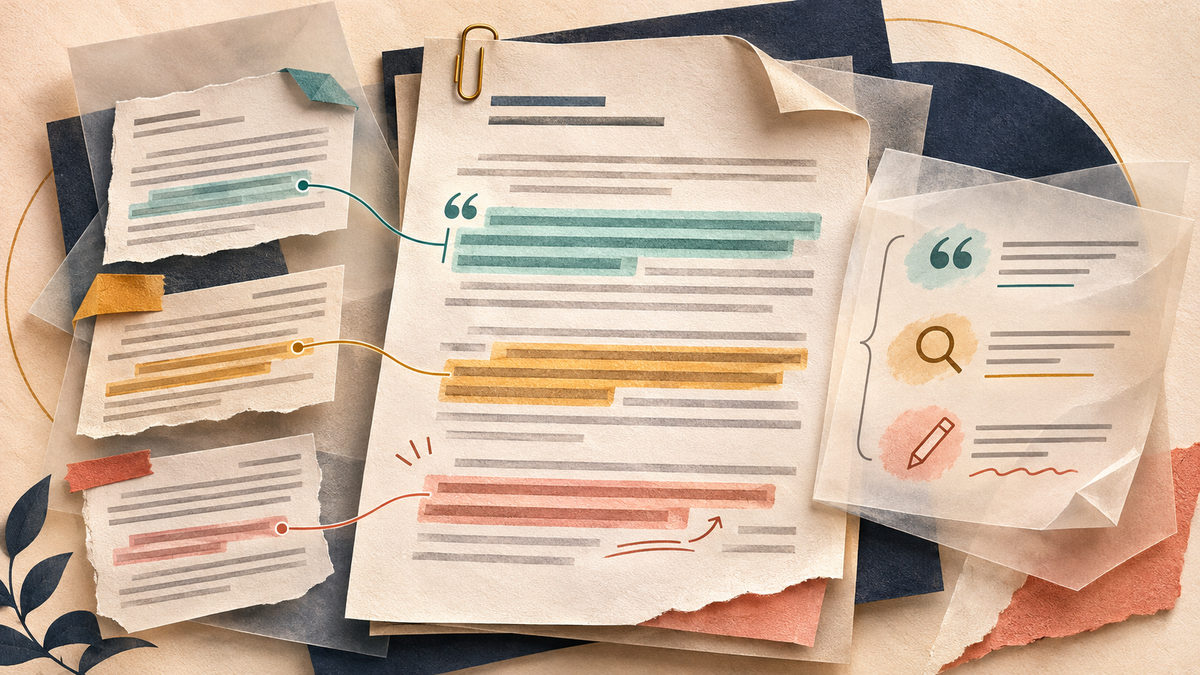
A plagiarism report can show a high similarity score even when you've cited your sources correctly. It can also show a low score while missing an attribution problem. The percentage alone doesn't tell you whether your writing is original, properly referenced, or ready to submit.
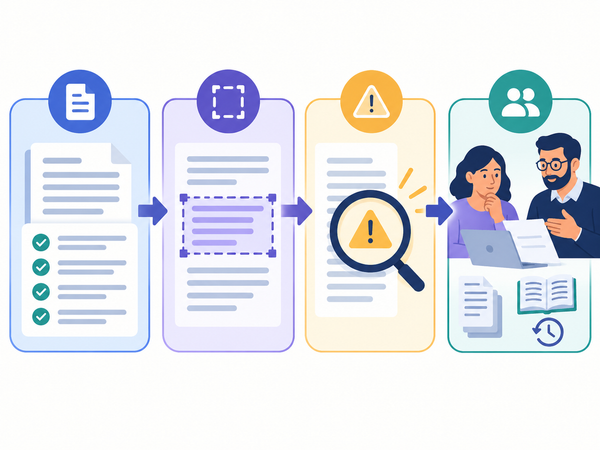
To read a plagiarism report, start with the overall score, examine the highlighted passages, open the matching sources, and decide whether each match is a legitimate quotation, a properly attributed paraphrase, common wording, or material that needs revision.
If you've checked your work with a plagiarism checker, the report is a starting point for reviewing source overlap—not a final judgment about plagiarism.
This guide explains what the results mean, how to investigate matches, and what to fix, with a worked example and a practical review checklist.
What Does a Plagiarism Report Actually Show?
A plagiarism report identifies text that matches or closely resembles material found in the sources available to a checking system.
Most similarity reports include several useful elements.
| Report element | What it means | What to check |
|---|---|---|
| Overall similarity score | The proportion of text identified as matching other sources under the tool's methodology | Where the matches occur and whether they are appropriately used |
| Highlighted passages | Sections that resemble text in detected sources | Whether the wording is quoted, paraphrased, or reused |
| Matching source list | Websites, publications, or other accessible documents associated with matches | Whether the source is relevant and whether attribution is correct |
| Source-level percentages | The amount of your document linked to individual sources, where reported | Whether a particular source contributes substantial repeated wording |
| Filters or exclusions | Settings that may remove certain matches from the displayed calculation | Whether quotations, references, or other material have been excluded |
Not every plagiarism checker displays these elements in the same way. Some show detailed source comparisons, while others provide a simpler list of matching passages.
For example, HumanizeAI's plagiarism checker documentation describes an overall score, highlighted text, a matching-source list, and source previews.
The important distinction is between similarity and plagiarism.
Similarity means that some text matches material found elsewhere. Plagiarism involves presenting someone else's words or ideas as your own without appropriate acknowledgment.
A legitimate quotation can create a text match. So can a bibliography entry, a commonly used phrase, or a previously submitted version of your own work.
As Turnitin explains in its similarity-score guidance, matching text requires interpretation before anyone can determine whether improper source use occurred.
The purpose of reading the report is not simply to make the percentage smaller. It is to identify which matches matter and resolve any genuine attribution or originality problems.
How to Read a Plagiarism Report: Step by Step
A reliable review follows seven steps. The sequence works for academic assignments, research papers, blog articles, and professional documents, although the applicable citation standards may differ.
Step 1: Check the Overall Similarity Score
Start by locating the percentage displayed at the top of your report.
Suppose a 1,000-word paper receives a 24% similarity score. In a simple word-based calculation, that would represent approximately 240 words matching material in the system's available sources.
The exact calculation depends on the checker, its exclusions, and how overlapping matches are handled.
The score doesn't explain why those words matched.
A 24% result might contain accurately quoted passages, an improperly copied paragraph, references, or a combination of all three.
There is no universally acceptable similarity percentage. Your institution, publisher, or organization may have its own expectations, but those requirements must be evaluated alongside the content of the matches.
Treat the percentage as a signal that tells you to review the report—not as a pass-or-fail grade.
Step 2: Examine the Highlighted Text
Next, look at the highlighted sections in your document.
Don't assume every highlight represents a problem. Instead, focus on where matches appear and how much text they cover.
Ask three questions:
- Is this a complete sentence or paragraph, or only a common phrase?
- Does the wording closely reproduce another source?
- Have I clearly identified where the information or language came from?
Pay particular attention to substantial continuous matches in the main body of your writing.
For example, a paragraph with several consecutive sentences matching one source deserves closer investigation than a highlighted phrase such as "according to the results."
The length and context of a match generally provide more useful information than its color alone.
Step 3: Open the Matching Sources
A highlighted passage tells you where overlap was detected. Opening the source helps you understand why.
Compare your passage with the matching material in its original context.
Check whether:
- The wording is identical or only similar.
- The same ideas appear in the same sequence.
- Your passage preserves the source's original meaning.
- The source is already acknowledged in your writing.
- The matching material comes from a quotation, reference, template, or previously published document.
Some reports identify more than one source for the same passage. A webpage may reproduce material from another publication, so the first listed match isn't necessarily the original author or earliest source.
Turnitin's guide to its Similarity Report explains how source cards and overlapping matches work in its reporting interface.
If the complete source is unavailable, record that limitation rather than treating the match as verified evidence of copying.
Step 4: Check Quotations and Citations
Now determine whether each substantial match uses source material appropriately.
For a direct quotation, check that the wording is reproduced accurately, the quoted material is clearly marked, and the required citation is present.
For a paraphrase, check that the idea is attributed and that you have expressed it using genuinely different wording and sentence structure.
A citation does not automatically make copied wording acceptable. If you reproduce an author's exact words, you generally need quotation marks or appropriate block-quotation formatting as well as attribution.
A paraphrase, meanwhile, must communicate the original idea accurately without closely imitating its language.
For a detailed explanation of these distinctions, see Paraphrase vs. Quotation: What Is the Difference?.
Step 5: Classify Each Match
Once you've reviewed a passage and its source, assign it a practical category.
You might classify it as:
- Acceptable source use: A correctly attributed quotation or appropriate paraphrase.
- Citation problem: Borrowed material without the necessary acknowledgment.
- Quotation problem: Exact source language presented without quotation marks.
- Close paraphrase: Wording or structure that follows the original too closely.
- Incidental match: Common language, reference details, or authorized template text.
- Unresolved match: A passage requiring additional source verification.
This classification is an editorial decision, not necessarily a feature automatically provided by your checker.
The goal is to distinguish matches that require correction from those that are legitimate in context.
Step 6: Revise the Matches That Need Attention
Start with the most consequential issues.
Correct substantial unattributed copying before spending time on small matches involving common expressions.
Depending on the issue, you may need to:
- Add a missing citation.
- Format exact words as a quotation and provide attribution.
- Rewrite an overly close paraphrase from your own understanding of the source.
- Remove material you cannot substantiate or appropriately use.
- Replace excessive borrowed wording with your own analysis.
When rewriting is appropriate, a paraphrase tool can help you explore alternative phrasing. However, any suggested wording still requires human review for accuracy, originality, and proper attribution.
Simply changing words or replacing them with synonyms does not resolve a plagiarism problem if the borrowed ideas remain unacknowledged or the wording stays too close to the source.
Step 7: Recheck Your Revised Document
After revising, inspect the updated document and run another similarity check if your tool and workflow permit it.
Review any remaining matches, especially in the sections you changed.
Don't judge success only by whether the overall percentage decreased. A legitimate quotation may remain highlighted, while a newly written paraphrase still requires a citation even if no match appears.
Before submitting or publishing, verify that the final version retains accurate quotations, complete references, and your intended meaning.
What Different Plagiarism Matches Mean—and What to Do
The following table helps you move from a highlighted passage to an appropriate action.
| Type of match | Example situation | Recommended action |
|---|---|---|
| Correctly cited quotation | A sentence is highlighted even though it appears in quotation marks with a reference | Verify accuracy and citation details; keep it if the quotation serves a purpose |
| Exact match without attribution | A paragraph reproduces another author's language without acknowledging the source | Quote and cite if appropriate, or rewrite genuinely and cite the borrowed ideas |
| Close paraphrase | A sentence changes a few words but follows the original wording and structure | Rewrite from understanding, then cite the source |
| Bibliography or reference match | A journal title, article title, or reference entry is highlighted | Check formatting; the match itself usually doesn't require rewriting |
| Common terminology or template wording | A standard technical phrase or required assignment heading matches another document | Check context and any template-use requirements |
| Reuse of previous work | A passage matches an earlier paper or article you wrote | Check self-reuse and disclosure rules; obtain permission or cite where required |
| Unexpected source match | A webpage matches your text, but its relationship to your work is unclear | Compare publication details and underlying sources before drawing conclusions |
A similarity report is most useful when each match leads to a specific review decision.
You should not automatically rewrite every highlighted passage. Doing so can remove accurate quotations, weaken necessary technical terminology, or introduce errors.
Worked Example: How to Interpret a 24% Similarity Report
Consider a fictional student who submits a 1,000-word research paper about access to university libraries.
The plagiarism checker returns an overall similarity score of 24%.
That number may initially look concerning, but it doesn't tell the student which passages are actually problematic.
For this illustration, assume the report identifies 240 matched words without overlapping matches. After examining the underlying passages, the student groups them as follows.
| Matched material | Matched words | Review finding | Decision |
|---|---|---|---|
| Direct quotation from a published source | 80 | Correctly quoted and cited | Keep and verify |
| Paragraph copied from an article | 70 | Exact wording without attribution | Correct immediately |
| Paragraph following another author's wording too closely | 50 | Inadequate paraphrasing | Rewrite and cite |
| References and common assignment wording | 40 | No evident misuse | Keep after checking |
| Total | 240 | 24% of the document | Review individual matches |
This is a hypothetical example, not an actual scan from HumanizeAI or another plagiarism checker. The categories were assigned during manual review; they are not presented as automatic report outputs.
Match 1: A Properly Cited Quotation
The student includes a direct quotation from a publication and provides the required citation.
The checker highlights all 80 quoted words because the text matches the published source.
Action: Verify the quotation, its citation, and whether that much quoted material is necessary. The student does not need to rewrite a legitimate quotation merely to reduce similarity.
Match 2: A Copied Paragraph Without Attribution
Another 70 words reproduce language from a source without quotation marks or a citation.
This is a meaningful problem, regardless of whether the overall similarity score is high or low.
Action: The student should either quote the passage with proper attribution, if the exact wording is needed and permissible, or explain the material independently and cite the source.
Match 3: An Overly Close Paraphrase
A third passage preserves much of another author's sentence structure while changing a few words.
Consider this fictional example.
Original source text:
During the winter pilot, the library added three evening hours so commuting students could study after work.
Overly close paraphrase:
During the winter trial, the library added three extra nighttime hours so commuter students could study after their jobs.
Although several words changed, the sentence structure and progression of ideas remain very close to the source.
Better paraphrase:
A winter scheduling experiment gave students who traveled to campus and worked during the day additional opportunities to use the library in the evening.
The revised sentence communicates the same underlying information with more independent phrasing. It still needs a citation to the fictional campus announcement from which the information came.
As Purdue OWL's paraphrasing guidance explains, successful paraphrasing involves communicating the source's meaning in your own words while acknowledging where the information came from.
Match 4: References and Common Wording
The remaining matches involve reference-list details and common assignment terminology.
These matches may be legitimate.
Action: Check the reference entries and confirm that any reused wording is permitted. If no attribution or reuse issue exists, the student can retain the material.
What Does This Example Tell Us?
The original 24% score included both acceptable source use and passages requiring correction.
The most important problems were not the percentage itself, but the unattributed copying and overly close paraphrase.
After making the necessary corrections, the student might receive a lower score, but a lower result is not guaranteed or required to establish that the revisions were appropriate.
A useful plagiarism review measures the quality of source use, not how close the document gets to zero similarity.
Why High and Low Similarity Scores Can Be Misleading
Is a High Similarity Score Always Bad?
No.
A high score may reflect substantial copied material, but it can also arise from quotations, required terminology, reference lists, or authorized reused content.
The interpretation depends on what matched and why.
A literature review with many legitimate quotations may show more overlap than a personal reflection. That difference does not automatically establish that the literature review is improperly written.
The relevant questions are whether the writer has provided appropriate attribution, used quotations correctly, and contributed enough independent analysis for the assignment or publication.
Is a Low Similarity Score Always Good?
Not necessarily.
A low score means the system found relatively little matching text under the conditions of that check.
It doesn't demonstrate that every borrowed idea is correctly acknowledged.
For instance, a writer might closely follow another person's argument while using sufficiently different language to avoid a substantial text match.
That can still create an attribution concern.
A checker also cannot compare a document against every possible source, so undetected overlap is not proof of complete originality.
Is 10%, 15%, or 20% an Acceptable Similarity Score?
There is no universal percentage that automatically makes a document acceptable or unacceptable.
Some institutions and editorial teams use similarity thresholds as screening rules. Those rules may help identify documents that need attention, but they cannot replace examination of the matched passages.
Turnitin explicitly explains that there is no single acceptable or perfect similarity score.
If your university or organization specifies a threshold, follow its instructions while also evaluating the actual source use.
A document can fall below an institution's screening threshold and still contain improper copying.
Why Do Similarity Scores Change?
Results can change when the document, comparison sources, or report settings change.
Possible reasons include:
- You revised or removed matched passages.
- The report applies different quotation or bibliography exclusions.
- A source was excluded from the displayed calculation.
- The system has access to different comparison material.
- The submitted text differs from an earlier version.
For example, a bibliography exclusion may reduce the displayed score without changing a single sentence in the document.
In tools that support them, filters should help reviewers focus on relevant matches—not hide genuine problems.
Turnitin documents how filters and source exclusions affect its results.
When comparing reports, check whether the same text and relevant settings were used.
What to Fix First After Reading a Plagiarism Report
Not every match deserves the same priority.
Use this decision framework to determine what to address first.
Priority 1: Unattributed Exact Copying
Review long passages reproduced from another source without appropriate quotation formatting or acknowledgment.
These are among the clearest problems a similarity report can help you identify.
Determine whether the original wording is genuinely necessary. If it is, quote and cite it correctly. If it isn't, write your own explanation and cite the source when its ideas or information are used.
Priority 2: Close Paraphrasing
Look for passages that retain the source's sentence structure or distinctive phrasing even after some words have been changed.
Read the source, set it aside, and explain the material independently. Then compare your revision with the original to check accuracy and wording.
Maintain the citation because the underlying ideas still came from another author.
Priority 3: Missing or Incomplete Citations
Check whether your text identifies the sources behind borrowed claims, evidence, and ideas.
Where the citation is missing, add the appropriate reference using the required style.
Remember that adding a citation alone does not resolve improperly copied exact wording.
Priority 4: Excessive Reliance on One Source
Even when a passage is properly attributed, a document may rely too heavily on a single publication.
Consider whether the assignment calls for additional evidence, comparison of perspectives, or independent analysis.
The solution may be to improve your argument and source synthesis rather than merely change the language.
Priority 5: Incidental Matches
Review matches involving common phrases, bibliography entries, standard definitions, or authorized templates.
If the wording is appropriate and correctly handled, it may not require changes.
Avoid spending time rewriting harmless text just to make a report look cleaner.
A Final Checklist Before Submitting or Publishing
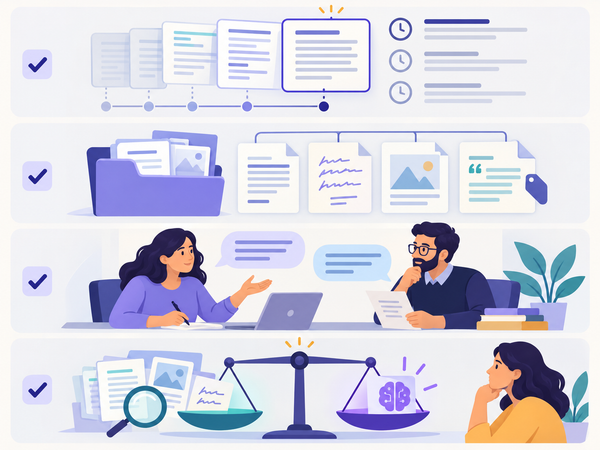
Once you've investigated the flagged passages, make a final check of your document.
- Every substantial match has been reviewed in context.
- Direct quotations are clearly identified and correctly attributed.
- Paraphrased ideas are cited and expressed in genuinely independent language.
- Missing references and inaccurate citations have been corrected.
- Long sections of borrowed wording have been reviewed for necessity and permission.
- Bibliography, template, and common-phrase matches have been assessed appropriately.
- Any unresolved source or authorship questions have been investigated.
- The final document preserves factual accuracy and the original meaning of cited material.
A plagiarism review can support this process by surfacing source matches for inspection, but the final decision requires attention to the writing and its sources.
For academic work, consult your instructor or institution's academic-integrity requirements when expectations are unclear. For professional publishing, follow the relevant editorial, attribution, and permissions policies.
Frequently Asked Questions About Plagiarism Reports
What does a 30% plagiarism score mean?
A 30% result generally indicates that the checker identified matching text accounting for approximately 30% of the analyzed document, according to its calculation method. It does not mean that 30% of the document has definitively been plagiarized. Review the matched passages and their sources to determine whether corrections are needed.
Can a plagiarism report flag correctly cited text?
Yes. Correctly cited quotations can still match the original published material. A match is not automatically evidence of improper source use. Check that the quotation is accurate, clearly identified, and referenced according to the required style.
Why is my bibliography highlighted in a similarity report?
Reference entries often contain the same titles, author names, publication details, and other standardized information found in existing documents. Some checking systems identify these as matches. Review the entries for accuracy, but don't rewrite correct bibliographic information solely to reduce similarity.
What should I do if my own previous work appears as a match?
Check the rules governing reuse of your earlier work. Some educational institutions require permission or disclosure before submitting material previously used for another assignment. Publishers may also have policies concerning duplicate publication. A self-match is not automatically evidence of wrongdoing, but it shouldn't be ignored.
Can I have 0% similarity and still have a plagiarism problem?
Yes. A 0% score means the tool did not identify qualifying text matches in that check. It cannot establish that all borrowed ideas were attributed, that every possible source was searched, or that the document satisfies every academic-integrity requirement.
Does a plagiarism score show whether text was written by AI?
No. Source similarity and possible AI authorship are different questions. A plagiarism checker examines source overlap, not who or what originally generated a passage.
For a more detailed comparison, read AI Detector vs. Plagiarism Checker: What Each Tool Actually Checks.
Final Thoughts: Read the Matches, Not Just the Percentage
A plagiarism report is most useful when you treat it as evidence to investigate rather than a verdict.
Start with the overall similarity score, inspect the highlighted passages, compare them with their sources, and determine whether each match involves legitimate source use or a problem requiring correction.
Keep appropriate quotations, acknowledge borrowed ideas, improve overly close paraphrases, and correct unattributed copying.
The best outcome isn't necessarily a 0% similarity score. It's a document whose source use is accurate, transparent, and appropriate for its intended purpose.