10 Best Generative Engine Optimization (GEO) Tools in 2026


The TL;DR
Generative engine optimization (GEO) tools track and improve how your brand shows up when ChatGPT, Gemini, Perplexity, or Google AI Overviews generate an answer in your category. The 10 tools below split into three jobs: pure measurement, optimization, and full execution. Real companies using GEO strategies well have seen meaningful results: a B2B SaaS client saw a 6x increase in AI-referred trials in one case study, and a Similarweb clickstream study found brands appearing in ChatGPT recommendations were 2.5x more likely to get a site visit within seven days. Pricing on the tools themselves ranges from $14/month add-ons to $399/month enterprise platforms.
What You'll Learn
- What a GEO tool measures, and how that's different from a traditional rank tracker
- How the top 10 tools were selected and evaluated for this comparison
- The 10 tools compared in depth: pricing, strengths, and where each one falls short
- Real, sourced case studies of companies that got measurable results from GEO work
- How GEO relates to SEO, AEO, and AI Search Visibility
- Which tool fits which kind of team
The Breakdown
What does a GEO tool actually measure?
Most GEO platforms send a set of representative prompts to ChatGPT, Gemini, Perplexity, and Google AI Overviews on a schedule, then parse the responses for brand mentions, direct citations, and competitor share of voice within the same answer. That's structurally different from a rank tracker, where a domain holds a fixed position on a results page or it doesn't. An AI answer is generated fresh each time and may not cite anyone at all, which is exactly why GEO tools exist: manual checking breaks down past a handful of prompts.
Worth knowing before you shop: according to Semrush's Topic Authority Study (July 2026), which tracked over 220,000 domains and 50,000+ brands across 1,094 categories from January to June 2026, only 15.2% of categories have a clear dominant brand, and traditional SEO metrics predict AI topic ownership weakly at best. Organic traffic correlated with topic ownership at just 48.4%. In plain terms: ranking well on Google doesn't reliably mean you're winning inside AI answers. That's the actual problem these 10 tools exist to solve.
How were these 10 tools evaluated?
Every tool on this list was selected and compared against the same five criteria, so the comparison isn't just a price list:
- AI platform coverage — does it track ChatGPT, Gemini, Perplexity, and Google AI Overviews, or only a subset?
- Measurement vs. optimization vs. execution — does it just report a number, diagnose the gap behind it, or help you fix the content?
- Pricing tier fit — is there a real entry point for a small team, or is this enterprise-only?
- Reporting depth — does it show the specific source page behind a citation, or just a yes/no mention count?
- Ease of self-serve setup — can a marketer get this running without a sales call and an onboarding project?
Several competing GEO tool roundups (SE Ranking's, Writesonic's) use similarly structured rubrics rather than a subjective ranked list, and that structure is worth borrowing: a stated methodology is itself a trust signal for both human readers and the AI systems that might cite this comparison.
How do the 10 tools compare?
Pricing above reflects each vendor's own publicly listed starting tier as last confirmed August 24, 2026. AI tool pricing changes often enough that a reader should always check the vendor's own page before budgeting.
Match the tool to your team
- Solo marketer or small team testing the waters: OtterlyAI ($29/mo) or HumanizeAI (from $14/mo) get you real tracking without a big commitment.
- Mid-market team that wants tracking plus a content fix: HumanizeAI, Peec AI, or SE Visible.
- Team already paying for Semrush or Ahrefs: their native AI visibility add-ons (Semrush AI Visibility Toolkit, Ahrefs Brand Radar) may cover what you need without a new vendor.
- Agency managing several client brands: SE Visible or Semrush, both built around multi-project reporting.
- Enterprise team that needs attribution modeling and dedicated support: Goodie or Scrunch, at enterprise pricing to match.
Real GEO results: case studies worth knowing
Numbers from vendor blogs are common in this category. The ones below are sourced from named organizations with stated methodology or a specific client engagement, not generic claims.
A B2B SaaS company saw AI-referred trials jump 6x. Per HubSpot's "Answer engine optimization case studies that prove the ROI of AEO in 2026" (Jenny Romanchuk, updated April 22, 2026), an agency called Discovered ran a technical SEO audit, fixed schema markup, published 66 AEO-optimized articles in one month, and used Reddit seeding for a B2B SaaS client. AI-referred trials went from 575 to 3,500+, a roughly 6x increase, alongside a 600% citation uplift.
Apollo.io built brand citation rate through community, not just content. The same HubSpot roundup covers Apollo.io's approach: building an active Reddit community (r/UseApolloIO, 1,100+ members) and using detailed competitor comparisons to control the narrative AI systems repeat about the brand. The result was a 63% brand citation rate for AI awareness prompts and 36% for category prompts.
A Webflow development agency got measurable pipeline from LLM traffic. Per the same source, Broworks implemented custom schema markup, comparison tables, and FAQ sections, and saw 10% of its organic traffic originate from LLMs, with a 27% conversion rate from AI-referred sessions to sales-qualified leads.
Go Fish Digital's own agency traffic grew 43% from ChatGPT, with a 25x higher conversion rate. In their own published case study (September 24, 2025), Go Fish Digital used prompt mapping, GA4 and log-file benchmarking, fact-dense cornerstone content, and query fan-out expansion. Monthly AI-driven traffic from ChatGPT grew 43%, and AI-driven leads converted at 25x the rate of traditional search traffic.
Brands that show up in ChatGPT recommendations get real, measurable traffic lift. Similarweb's clickstream study (July-December 2025, with supplementary survey research in January 2026) tracked real user behavior across three competitive verticals rather than modeling estimates. Brands appearing in ChatGPT recommendations were 2.5x more likely to get a site visit within seven days than peers that weren't recommended. In the finance vertical specifically, 7.2% of users visited the recommended brand (American Express) after an AI suggestion, versus 3.1% for the non-recommended competitor (Capital One).
None of this means any specific tool on the list above produced these results. These are case studies in GEO strategy and execution broadly, cited here so a reader has real evidence that the work behind a GEO tool's dashboard can move real numbers, not just a tracking score.
GEO vs. SEO vs. AEO vs. AI Visibility Tools: what's actually different?
GEO vs. SEO. Traditional SEO gets you a position on a fixed results page. GEO gets you cited, mentioned, or recommended inside a generated AI answer, where there's no fixed page and no guaranteed link back to your site at all. You need both. Neither replaces the other.
GEO vs. AEO. Answer engine optimization (AEO) is the tactic: does this specific page answer a question cleanly enough that a model wants to pull from it right now. GEO is the outcome that tactic is aimed at: across everything you publish, does your brand actually show up in AI-generated answers. AEO is page-level work. GEO is the brand-level result of doing AEO well, consistently, across your content. See our AEO tools comparison if page-level answer structure is the specific gap you're closing.
GEO vs. AI Search Visibility tools. In practice, these terms describe the same job. A tool that tracks "AI search visibility" and a tool that tracks "GEO performance" are both measuring the same thing: does your brand appear when someone asks an AI system a question in your category. The vocabulary split is mostly a marketing artifact, not a real functional difference. For a broader, entry-level comparison of tools in this exact space, see our AI search visibility tools guide.
For a deeper, plain-language breakdown of how SEO, AEO, and GEO relate to each other, see SEO vs AEO vs GEO: What Gets You Cited in 2026.
What's a practical GEO workflow, beyond just buying a tool?
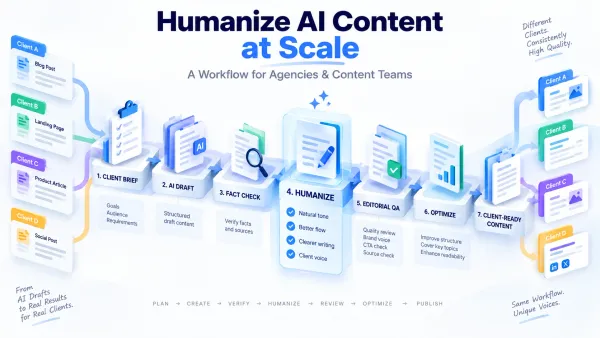
Buying a dashboard without a process to run it is the most common way to waste a GEO subscription. A workable loop looks like this:
- Build a set of 25-50 real buyer questions, not keyword fragments, the way your ICP would actually type them into ChatGPT or Perplexity.
- Run them and find where competitors are winning citations you're not.
- For each gap, inspect the actual source page the AI system pulled from. Often it's not the strongest page on the topic, just the most technically visible one.
- Decide whether the fix is a content update, a new page, or a technical fix (schema, rendering, crawlability).
- Re-run the same prompt set on a 30-day cycle and track the delta.
Treat this as a recurring measurement loop, not a one-time content project.
Founder Observation
With more change in SEO over the past 12 months than in the past 12 years, the new playbook is being written. There was no playbook for GEO or AEO when I started building this practice over the past few years. We are writing it as we go, and the platforms tracking this space today are still writing it too. None of the 10 tools above agree on exactly what to measure. Some count any brand mention, some count only linked citations, some weight share of voice against named competitors. That's not a flaw in any one tool. It's a sign the category is under two years old. So buckle up, with the amount of money flowing into this market, the innovation will be enormous.
The case studies above back up something I've seen firsthand: backlinks and brand mentions from real third-party sources, like Apollo.io's Reddit community, move AI citation rate faster than fiddling with on-page structure alone. A GEO tool will show you the gap. Closing it usually takes more than a content edit.
Research & Supporting Evidence
- Semrush's "AI visibility is a topic-level game" study (July 20, 2026), tracking 220,000+ domains and 50,000+ brands across 1,094 US categories from January to June 2026, found that only 15.2% of categories have a clear dominant brand and that organic traffic correlates with topic ownership at just 48.4%. Source
- Similarweb's clickstream study (July-December 2025, supplementary survey January 2026) found brands appearing in ChatGPT recommendations were 2.5x more likely to receive a site visit within seven days than non-recommended peers, based on opted-in U.S. desktop panel data across finance, travel, and beauty verticals. Source
- HubSpot's "Answer engine optimization case studies that prove the ROI of AEO in 2026" (Jenny Romanchuk, updated April 22, 2026) documents named client results including a 6x increase in AI-referred trials for a B2B SaaS client and a 63% brand citation rate for Apollo.io. Source
- Go Fish Digital's own GEO case study (September 24, 2025) reports a 43% increase in monthly AI-driven traffic from ChatGPT and a 25x higher conversion rate from AI-driven leads versus traditional search. Source
- Aggarwal et al., "GEO: Generative Engine Optimization" (Princeton, IIT Delhi, and Georgia Tech, ACM SIGKDD 2024), found that adding named source citations to existing claims increased AI citation rates by as much as 115% for mid-ranked pages across 10,000 tested queries. Source.
A note on sourcing, for transparency: the Writesonic-published comparison in this same competitive space cites a large proprietary dataset (2.4 million domains, 282 million AI citations). Writesonic is also one of the 10 tools compared in this article, and their own page discloses the resulting conflict of interest. That figure is not used here for that reason; it's mentioned only so a reader who encounters it elsewhere understands the context.
Mini Case Study
One of our agency clients, a mid-market SaaS company, ran a 40-question Prompt Audit across ChatGPT, Perplexity, and Google AI Overviews. What they found was eye-opening and not great. They were cited on 6 of 40 prompts. Their GEO tool's source-page breakdown shows four of those six citations trace back to a single older comparison page with unusually clean FAQ schema. Although they had invested in great content, did their own research. What they realized is the stronger, more current guides and articles had zero citation. After studying this, they realized the pages were rendering client-side in JavaScript and simply isn't visible to the crawlers behind these systems. Often times the fix isn't more content. It's a technical rendering fix on a page that already deserved the citations. This is exactly the failure mode that these tools seek to catch.
Key Takeaways
- GEO tools track brand mentions and citations across ChatGPT, Gemini, Perplexity, and Google AI Overviews, not fixed search rankings.
- Real companies have gotten measurable results from GEO work: a 6x increase in AI-referred trials, a 43% jump in ChatGPT-driven traffic, and a 2.5x higher chance of a site visit when recommended by AI, all independently sourced and dated.
- The category splits into measurement, optimization, and execution tools. Know which job you're actually buying before you compare prices.
- GEO and AEO aren't competing categories. AEO is the page-level tactic; GEO is the brand-level outcome.
- A tracking number without a plan to act on it doesn't move. Third-party validation (community presence, backlinks, real mentions) moved the needle faster than on-page tweaks alone in the case studies above.
- Confirm current pricing directly with each vendor before budgeting.
FAQ
What is a GEO tool? A GEO (generative engine optimization) tool tracks whether your brand gets mentioned or cited when AI systems like ChatGPT, Gemini, Perplexity, or Google AI Overviews generate an answer in your category, and helps you understand and close the gaps where it doesn't.
Is GEO the same thing as AEO? They're related but not identical. AEO is the tactic of structuring a specific page so it can be pulled into an AI answer. GEO is the outcome of whether a brand shows up across AI-generated answers overall. Most 2026 marketing uses the terms close to interchangeably, but the distinction is tactic versus result.
How is a GEO tool different from an AI search visibility tool? In practice, they measure the same thing. The vocabulary difference is mostly a marketing choice by different vendors, not a meaningfully different function.
How much do GEO tools cost in 2026? Starting prices in this comparison range from $14/month (HumanizeAI) to $399/month (Goodie), with most mid-market options landing between $79 and $199/month.
Do I need a dedicated GEO tool if I already use Semrush or Ahrefs? Not necessarily. Both platforms now offer GEO and AI visibility add-ons that may cover what you need without adding a separate vendor.
How long until a GEO tool shows results? It depends more on the fix than the tool. Go Fish Digital's own case study showed a 43% traffic increase attributed to a structured, multi-step approach (prompt mapping, benchmarking, cornerstone content, query fan-out) run over a sustained period, not an overnight change. Expect a real GEO program to need at least one full 30-day measurement cycle before you can tell if a fix worked, and often several cycles for competitive categories.
Can a small business compete in GEO without enterprise tools? Yes. Several tools on this list start under $30/month (OtterlyAI, HumanizeAI), and the case studies above show that strategy and content quality, not tool budget, tend to be the bigger driver of results. Apollo.io's community-building approach and Broworks' schema and FAQ work are both replicable by a small team without an enterprise platform.
Start Your GEO Process Now!
If a GEO check shows real gaps in your citation rate, HumanizeAI covers what most tracking dashboards stop short of: content structured, sourced, and optimized to actually close the gap, not just report on it.
Additional Resources
- SEO vs AEO vs GEO: What Gets You Cited in 2026 — confirmed live, 15 Sep 2026. Stands in for the AEO/GEO pillar link until that pillar page is actually built; swap this link once it ships.
- 10 Best Answer Engine Optimization (AEO) Tools in 2026 — confirmed live, 15 Sep 2026. Sibling cluster article, genuinely relevant per the GEO vs. AEO section above.
- 10 Best AI Search Visibility Tools in 2026 — confirmed live, 15 Sep 2026. Sibling cluster article, genuinely relevant per the "GEO vs. AI Search Visibility tools" section above.
- HumanizeAI Pricing — confirmed live, 15 Sep 2026.
- About Steve Palomares — confirmed live, 15 Sep 2026. Corrected from the dead /author/steve-palomares/ URL used in the prior draft.
About the Author
Steve Palomares has spent 30 years in GTM leadership, including building AEO and GEO practice from the ground up before there was an established playbook for it. He writes HumanizeAI's content on AI search visibility, content optimization, and what actually earns citations from answer engines. Full bio.