Is It Ethical and Legal to Humanize AI-Generated Content? What the Law Actually Says in 2026
Humanizing AI content isn't illegal, but disclosure law is. See what the FTC, EU AI Act, and NY law require in 2026 before you publish.


Quick Summary: Humanizing AI content isn't inherently unethical. It becomes a problem when it's used to misrepresent authorship in a context where disclosure is legally required or where honesty about process is what the reader is actually relying on, like academic work or sponsored advertising. In 2026, disclosure obligations from the FTC, the EU AI Act, and New York state law mean this question has moved from a philosophical debate to a compliance one. What matters is not whether you used AI. It's whether you disclosed it where disclosure is required, and whether the content is actually valuable or just AI slop.
What You'll Learn
- Whether humanizing AI content counts as deception, and where the line actually sits
- What the FTC, EU AI Act, and New York's disclosure law require in 2026
- Whether Google penalizes humanized AI content differently than raw AI output
- Where academic integrity rules diverge from marketing and business disclosure rules
- How to think about humanization as a quality practice instead of a concealment tactic
The TLDR
Humanizing AI content is not, by itself, unethical or illegal. The ethics question depends entirely on context: what the content is for, who's relying on it, and whether a disclosure law applies. If you're new to the practice itself, see our guide on how to humanize AI text for the mechanics before diving into the policy side covered here.
For marketing and business content, the operative 2026 US standard comes from the FTC: sponsored content that used AI in a way that materially changed its meaning or tone needs a "double disclosure," covering both the sponsorship and the AI involvement. The EU AI Act's Article 50 sets a parallel, stricter requirement starting August 2, 2026, with fines running into the millions of euros for non-compliance. New York's own AI disclosure law took effect June 9, 2026, focused specifically on synthetic performers in advertising, not general text content.
None of these laws ban humanizing AI content. They require disclosing when content was substantially AI-generated in specific contexts, mostly advertising and public-facing communications. Humanizing text so it reads better is a separate act from concealing that AI was used where disclosure is legally owed. Confusing those two is where most of the ethical confusion online actually comes from.
Is Humanizing AI Content the Same Thing as Hiding That You Used AI?
No, and conflating these two questions is where most of the "is this ethical" confusion comes from.
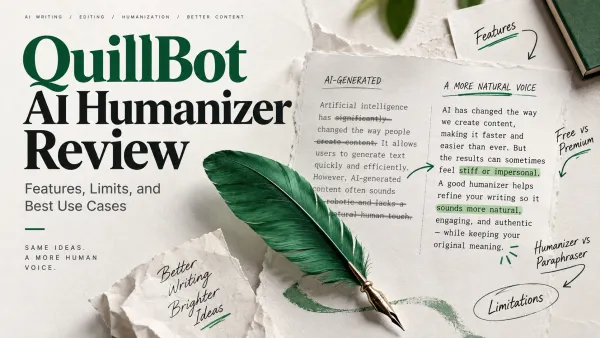
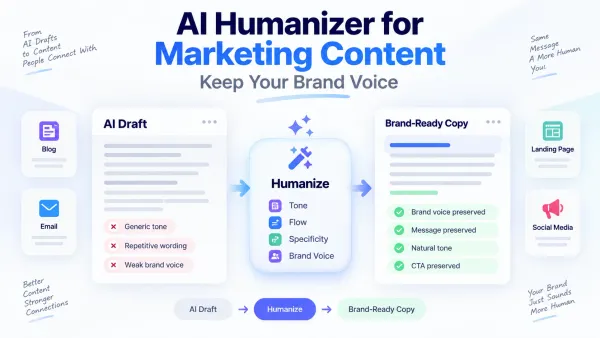
Humanizing is an editing practice: taking AI-generated text and rewriting it so the rhythm, voice, and specificity read like a person wrote it. Hiding AI use is a disclosure decision: choosing not to tell someone that AI was involved, in a context where that fact matters to them.
You can humanize content and still disclose that AI was used in producing it. You can also publish raw, unedited AI output and never disclose it. The two acts are independent. What makes non-disclosure a problem isn't the quality of the writing. It's whether the audience had a right to know, and whether a law or platform rule says they did.
What Does US Law Actually Require for AI Content Disclosure in 2026?
At the federal level, the clearest signal comes from actual FTC enforcement rather than a standalone disclosure statute. In its case against Rytr LLC, the FTC's complaint centered on an AI writing tool generating reviews with specific, fabricated details unrelated to what users actually input, details that could deceive people relying on those reviews to make purchasing decisions. The FTC has also run broader sweeps like Operation AI Comply, targeting companies that used AI to power deceptive or unfair conduct.
The pattern across FTC action isn't "disclose AI use or else." It's that Section 5 of the FTC Act, the general ban on deceptive and unfair practices, applies to AI-assisted content the same way it applies to anything else. Content that deceives a consumer is a problem regardless of whether AI, a human, or some mix of both produced it. Humanizing that content doesn't change the underlying deception. It just makes it read more convincingly.
New York's disclosure law is narrower than most marketers assume. Signed by Governor Hochul on December 11, 2025 and effective June 9, 2026, it requires conspicuous disclosure specifically when an advertisement features a "synthetic performer," meaning a digitally created asset made to look like a real human who isn't actually a real, identifiable person. It applies to any ad reaching a New York audience, regardless of where the advertiser is based, and carries civil penalties of $1,000 for a first violation and $5,000 for each one after that.
That means New York's law targets synthetic video and image performers, not blog posts or marketing copy. If your content is text, this specific statute doesn't reach you, though the FTC's broader disclosure expectations still might.
Industry analysts expect 10 to 15 US states to have their own AI advertising disclosure laws in place by the end of 2026, which means the patchwork is going to get more complicated before it standardizes.
What Does the EU AI Act Require, and Does It Apply to US Content?
The EU AI Act's Article 50 is the most consequential disclosure rule on the horizon, and it reaches further than most US-based marketers expect.
Article 50 requires that AI-generated text, images, audio, and video be marked as AI-generated in a way that's both detectable by machines and, in most cases, visible to the person consuming it. Enforcement begins August 2, 2026. Penalties scale up to 15 million euros or 3% of global annual turnover for general obligations, and as high as 35 million euros or 7% of turnover for the most serious violations tied to prohibited AI practices.
The extraterritorial reach is the part that catches US teams off guard. If your content, including a blog post or a piece of marketing copy, reaches an EU audience, Article 50 can apply to you regardless of where your company is headquartered. This follows the same jurisdictional logic as GDPR: if you're already thinking about EU data compliance, you're already thinking in the right framework for this.
Article 50 does include a carve-out for content that has genuine human review and editorial responsibility behind it. If a person reviews, edits, and takes ownership of AI-assisted content before it publishes, the disclosure trigger may not apply in the same way it would to raw, unreviewed AI output. The exact boundaries of that carve-out are still being finalized through the EU's Code of Practice, with a final version expected ahead of the August deadline.
Does Google Penalize Humanized AI Content Differently Than Raw AI Output?
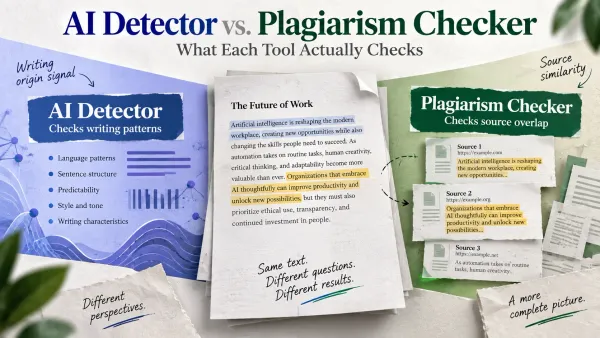
No. Google's policy has never been about detecting AI involvement and penalizing it. It's about content quality, regardless of how the content was produced.
Google's own guidance is explicit on this point. In Google Search Central's official guidance on AI-generated content, the company states that using automation, including AI, to generate content with the primary purpose of manipulating search rankings violates its spam policies, but that not all use of AI generation is spam. Google's stated focus is the quality of the content rather than how it's produced, the same standard it has applied to human-generated content for years.
This is worth sitting with, because it cuts against a lot of the "humanize to trick Google" framing that shows up in AI writing content online. Google isn't running a detector that penalizes AI-assisted text and rewards humanized text. It's evaluating whether the page is actually useful, accurate, and demonstrates real expertise, the same standard it applies to anything else.
Where AI content does get penalized is under Google's scaled content abuse policy, which targets content, humanized or not, published primarily to manipulate search rankings rather than to help a reader. Humanizing thin, low-value AI content doesn't fix the underlying problem. It just makes thin content read more smoothly. This is really the same trust problem covered in our Answer Engine Optimization playbook: content earns citation and ranking through genuine usefulness, not through disguising its production method. It's also worth reading how humanization actually affects AI search citations directly, since humanized text alone isn't a ranking signal either way.
Where Do Academic Integrity Rules Diverge From Business Disclosure Rules?
This is the sharpest divergence in the whole topic, and it's where a lot of confused advice online comes from treating "is this ethical" as one universal question instead of a context-specific one.
In an academic setting, the implicit contract with a reader (a professor, an admissions committee, a grader) is that the work represents the student's own thinking and effort, unless the assignment says otherwise. Humanizing AI-generated text to pass an academic integrity check isn't a disclosure gap. It's a direct violation of that contract, regardless of whether any specific law is broken. Universities and academic institutions treat this as an honor code and plagiarism issue, evaluated under institutional policy, not FTC or EU AI Act frameworks. This is also why our own Acceptable Use Policy draws a hard line on academic dishonesty rather than leaving it to interpretation.
In a business or marketing setting, the implicit contract is different. Nobody assumes a company's blog post was written entirely by one named human with zero tools, the way an academic assignment assumes a student's individual effort. Business disclosure obligations, where they exist, are statutory (FTC, EU AI Act, state laws) and narrower in scope, generally triggered by advertising, sponsorship, or specific content types like synthetic video, not general content marketing.
Treating a company blog post and a college essay as the same ethical category is a category error. The obligations, the audience expectations, and the actual laws involved are different in each case.
"The ethics question was never really about AI. It was always about whether you're honest with the specific person relying on your work, in the specific context where honesty is the thing being promised." -- Steve Palomares
HumanizeAI Framework References
This question sits directly inside the third leg of HumanizeAI's H.E.A.R.T. framework: Trust Signals Throughout. Trust isn't something you bolt onto content after the fact. It has to be built into the content and the process from the start, which includes being honest about what disclosure obligations actually apply to a given piece rather than assuming either "AI is always fine" or "AI always needs a giant disclaimer."
This also connects to the GEO Visibility Framework's third Citation Test: does AI trust the brand? AI engines weigh reputation and consistency signals when deciding what to cite, the same way a human reader does. A brand that's transparent about its process, where transparency is actually owed, builds exactly the kind of trust signal that both human readers and AI citation systems reward. Content that quietly obscures its own production process to dodge a disclosure requirement is optimizing against the same trust signal it needs to be citable long-term.
Founder Observation
After the March 2026 core update hit HumanizeAI's organic traffic, I went looking for the root cause, and it wasn't technical. It was a trust gap. The site had reasonably solid content, but weak trust signals: no clear author voice, no sourced data, nothing that told a reader or a crawler who was actually behind the words.
That experience reframed how I think about the disclosure question entirely. Disclosure isn't a legal chore you do to stay out of trouble. It's the same trust infrastructure that makes content worth citing in the first place, whether the citation comes from a person, from Google, or from an AI engine. A business that's cagey about its AI use, in a context where it should say so, is telling both regulators and AI systems that its content can't be fully trusted. That's a self-inflicted wound that has nothing to do with whether the writing itself is any good.
Research & Supporting Evidence
According to the EU AI Act's official text on transparency obligations, Article 50 enforcement begins August 2, 2026, and the European Commission published draft guidelines on the scope and application of the article on May 8, 2026, with a final Code of Practice expected ahead of the enforcement date.
According to Dynamis LLP's legal analysis of New York's AI disclosure law, Governor Hochul signed the Synthetic Performer Disclosure Law (A8887-B, Chapter 617 of the Laws of 2025) on December 11, 2025, and it took effect June 9, 2026, with civil penalties of $1,000 for a first violation and $5,000 for each subsequent one.
According to the FTC's own press release on the Rytr LLC matter, the underlying complaint alleged that the AI writing tool generated reviews containing specific, fabricated details unrelated to what users had actually input, details likely to deceive people relying on those reviews to make purchasing decisions.
According to Google Search Central's official blog post on AI-generated content, Google's ranking systems focus on content quality rather than production method, and using AI primarily to manipulate search rankings violates its spam policies while other legitimate AI use does not.
Mini Case Study and Illustrative Example
A mid-sized SaaS content team was publishing two AI-assisted blog posts per week, lightly edited for voice but not substantially rewritten. When their agency partner started running EU-facing paid social campaigns using excerpts from those posts as ad copy in June 2026, their legal team flagged a gap: nobody had mapped which content was AI-generated enough to trigger Article 50 disclosure obligations once it moved from organic blog content into paid EU advertising.
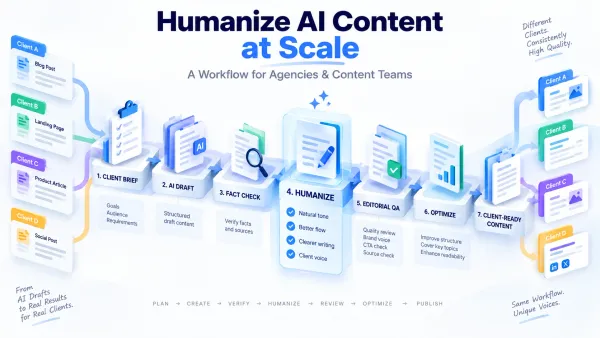
The fix wasn't to stop using AI. It was to build a simple internal log: which pieces were AI-assisted, what level of human review and editing each one went through, and which pieces were being repurposed into contexts (paid ads, EU-facing campaigns) where disclosure rules might apply differently than they did for the original organic blog post. The humanization process itself didn't change. What changed was tracking where the content ended up and matching disclosure decisions to that context, not to the writing process alone.
Key Takeaways
- Humanizing AI content and disclosing that AI was used are two separate, independent decisions. Neither one determines the other.
- US disclosure law in 2026 is a patchwork: FTC "double disclosure" guidance for sponsored content, a narrow New York law focused specifically on synthetic video performers, and 10 to 15 more states expected to pass their own rules by year end.
- The EU AI Act's Article 50 is broader and reaches US companies whose content reaches EU audiences, with enforcement starting August 2, 2026 and penalties up to 7% of global turnover for the most serious violations.
- Google does not penalize humanized content differently than raw AI content. It penalizes low-quality, low-value content, produced either way, under its scaled content abuse policy.
- Academic integrity rules are a different ethical category from business disclosure law. Confusing the two produces bad advice in both directions.
- Disclosure, where it's actually owed, functions as a trust signal that benefits both human trust and AI citation trust, not just a compliance checkbox.
Frequently Asked Questions
Is it illegal to humanize AI-generated content? No. Humanizing AI content, meaning editing it to sound more natural, isn't illegal anywhere. What can be regulated is failing to disclose that AI was used, in specific contexts like advertising, where a law such as the EU AI Act or a state disclosure statute applies.
Do I have to disclose that a blog post was written with AI help? It depends on jurisdiction and use. General organic blog content in the US currently has no blanket disclosure mandate. If that same content is repurposed into paid advertising reaching EU audiences, or involves a sponsorship relationship in the US, disclosure obligations under the EU AI Act or FTC guidance may apply.
Does humanizing AI content help it pass Google's AI content detection? Google doesn't run a detector that penalizes AI-assisted content specifically. It evaluates content quality and usefulness regardless of how it was produced, and separately penalizes content published at scale primarily to manipulate rankings, whether that content is humanized or not.
Is using an AI humanizer considered academic dishonesty? In most academic settings, yes, if the assignment expects the student's own original work and AI use isn't disclosed or permitted. This is governed by institutional honor codes and academic integrity policy, which is a separate framework from business or marketing disclosure law.
What happens if I don't comply with the EU AI Act's disclosure rules? Penalties under Article 50 can reach 15 million euros or 3% of global annual turnover for general violations, and up to 35 million euros or 7% of turnover for the most serious cases. The obligation applies to any company whose AI-generated content reaches EU audiences, regardless of where the company is based.
Humanize your AI Content. Keep the trust signals intact.
HumanizeAI helps you turn AI-assisted drafts into content that reads like you wrote it, without cutting corners on the substance that actually earns trust with readers, Google, and AI engines alike.
Try the AI Article Agent
See Pricing
Free plan available · No credit card required
Additional Resources
- How to Humanize AI Text: The Complete Marketer's Guide
- Answer Engine Optimization: The 2026 Marketer's Playbook
- Responsible AI & Content Integrity Policy – HumanizeAI's own ethics and content integrity position
- The Responsible Content Framework – the six-pillar framework behind the Content Authority Score
- Does Humanizing AI Text Help or Hurt Your AI Search Citations?
About the Author
Steve Palomares has spent 25+ years building software companies. Now owner of HumanizeAI, he writes about AI content strategy for marketing, AEO, GEO and growing software businesses with AI. Based in North Texas.