Does Humanizing AI Text Actually Get You Cited by ChatGPT?
Humanizing AI text does not automatically get you cited by ChatGPT, no platform scores 'humanness' as a ranking signal. What actually matters is structure and trust signals, and humanization can help or hurt those depending on how you do it.


Published: June 30, 2026 | Updated: September 25, 2026 Author: Steve Palomares | Read time: 10 minutes
Quick Summary: Humanizing AI-generated text has no documented direct effect on whether ChatGPT, Perplexity, or Google AI Overviews cite your page. No platform scores "humanness" as a ranking signal. What actually decides citations is structural extractability (can the model lift a clean, self-contained answer from your page) and source trust signals (authority, freshness, original data). Humanization affects those two things indirectly, sometimes for the better, sometimes for the worse, depending on how it's done.
What You'll Learn
- What AI search engines actually score when deciding what to cite, and why it has nothing to do with detecting AI-written prose
- Where humanization genuinely helps citation odds, and where detector-driven humanization actively hurts it
- The three most common humanization mistakes that work against getting cited
- How HumanizeAI's GEO Visibility Framework applies to this exact question
- A practical, priority-ordered checklist for what to actually do about it
The TLDR
Humanizing AI-generated text has no measurable direct effect on whether ChatGPT, Perplexity, or Google AI Overviews cite your page. No platform runs an "is this AI-written" classifier in its citation pipeline, and there's no published study showing AI-generated prose gets cited less than human-written prose, holding quality constant.
What actually decides citations is structural extractability (can the model lift a clean, self-contained answer from your page) and source trust signals (authority, freshness, original data, and whether crawlers can even read you). Humanization touches those two levers indirectly. A humanization pass that tightens voice and removes hedge language can make a passage more citable. A humanization pass built purely to dodge AI detectors, with synonym-swapping and randomized sentence length, usually makes it less citable.
That's the honest, slightly less satisfying answer than the one a lot of "humanizer" tools are selling right now. I run HumanizeAI, so I have every commercial incentive to tell you that running your content through a humanizer is the missing ingredient for AI visibility. It isn't, not directly. The relationship is real, it's just more indirect, and more interesting, than the marketing copy suggests.
What Do AI Search Engines Actually Score When Deciding What to Cite?
Content structure is the single biggest lever. Averi's analysis of citation patterns found that 72.4% of ChatGPT-cited pages contain "answer capsules": self-contained 40-60 word answers sitting directly under an H2 heading, phrased to mirror a real question (Averi, "The Answer Capsule Playbook," 2026). The best-performing capsules avoid hyperlinks inside the answer itself, since a link breaks what GEO practitioners call the "information island" test: can this paragraph stand alone, fully comprehensible, with no surrounding context?
This decoupling between ranking and citation is well-documented on its own. See Citability Is Not a Checklist for the mechanics of why RAG chunking evaluates passages independently of how a page ranks.
Question-style H2s and answer-first openings appear to lift citation rates in the research compiled by AI SEO platforms, though the precise percentage lift varies by source and methodology.
Source trust and freshness matter more than most marketers expect. Reddit alone accounts for 46.7% of Perplexity's top 10 citations, more than three times its next most-cited source, YouTube, at 13.9% (Discovered Labs, "AI Citation Patterns," 2025). Wikipedia plays the equivalent role for ChatGPT, accounting for roughly 7.8% of its total citations (tryprofound, "AI Platform Citation Patterns," 2026). Original data and proprietary research consistently outperform generic explainer content across platforms, even when the explainer is well-written.
Independent research published since this piece first went live backs the same structural-over-stylistic conclusion at greater scale. Higglo Digital's analysis of 129,000 domains, 216,524 pages, and 100,000 ChatGPT prompts across 20 niches found domains with 32,000+ referring domains earn 3.5 times more citations than domains with 200 or fewer, and that pages updated within the last three months earn almost twice the citations of outdated content (Higglo, "The Real Factors Behind ChatGPT Citations," 2026). Separately, Ahrefs' correlation analysis across 75,000 brands found branded web mentions correlate with AI Overview visibility roughly three times more strongly than backlinks do, a 0.664 versus 0.218 Spearman correlation (Ahrefs, "An Analysis of AI Overview Brand Visibility Factors," May 2025, updated April 2026). Neither study measured humanization or AI-detection scores at all, which is itself the point: the factors researchers keep finding are referring domains, freshness, and brand mentions, not writing style.
Crawlability is a hard gate, not a soft preference. Sites that block the crawlers these platforms depend on are measurably less likely to ever appear as a cited source, full stop. A page can have perfect prose and still be invisible if a crawler can't reach it.
Platform fragmentation is real and underappreciated. Only about 11% of domains get cited by both ChatGPT and Perplexity, according to Averi's analysis of roughly 680 million citations (authoritytech.io, "ChatGPT vs Perplexity: Only 11% of Cited Sources Overlap," 2026). ChatGPT's retrieval leans on Bing's index and tilts toward encyclopedic and editorial sources. Perplexity crawls continuously and shows a strong tilt toward community platforms like Reddit, a reliance that's now legally contested: Reddit sued Perplexity in October 2025 over data scraping, alleging Perplexity accessed Reddit's user content through third parties that scraped the platform (CNBC, October 2025). None of this has anything to do with whether the cited content was humanized.
How Does Humanization Actually Affect AI Search Citations?
If style isn't a direct ranking input, why does this question keep coming up? Because humanization changes three things that sit adjacent to citation performance, and it can move them in either direction.
1. A good humanization pass can fix the things that make AI text bad at being an answer capsule. A bad one makes them worse. Default AI-generated drafts have a recognizable shape: heavy hedging, inflated transitions, and a habit of burying the actual answer three sentences into a paragraph instead of leading with it. A humanization pass that does real editorial work, tightening sentences, cutting hedge phrases, restoring a direct voice, moves a passage closer to the answer-first, self-contained shape research associates with higher citation rates. A pass built purely to evade AI detectors does the opposite. Synonym-swapping and randomized sentence-length variation routinely reduce clarity and break the clean declarative structure that answer extraction depends on. If your humanizer's only metric is "detector score went down," you can make your content less citable while making it "more human" by a checker's definition.
2. Humanization affects trust signals through what you put back in, not through style. The highest-leverage move isn't disguising that AI wrote a draft. It's adding things AI drafts don't generate on their own: original data, a named author with real credentials, a specific example, a number you actually measured. A genuinely good humanization workflow does this naturally, because it forces a human pass where someone adds their own experience, corrects a generic claim with a specific one, and removes the AI's tendency to gesture at authority instead of citing one.
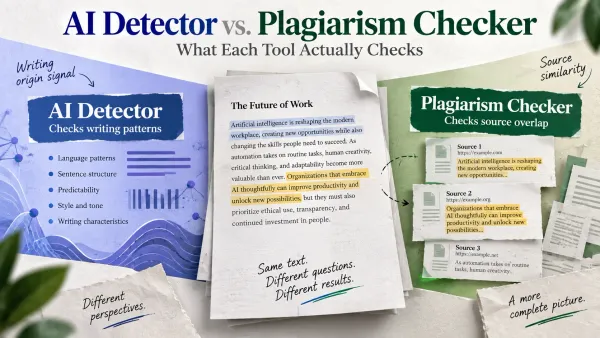
3. Detector-driven humanization solves a problem AI search engines don't have. There's no evidence any major AI search system runs your content through an AI detector before deciding to cite it. AI content detectors are built for a different job entirely: academic integrity, editorial policy enforcement on platforms like Medium, contractual content-mix requirements. Detector accuracy itself is shakier than most people assume. Published accuracy claims vary widely by vendor, dataset, and content type, and false positive rates on non-native English writing have been measured as high as 61.3% in earlier academic studies, against roughly 1% on general academic text from the stronger tools (GradPilot, "AI Detector False Positive Rates: 2026 Data Compared"). If you're humanizing purely to beat a detector, you're optimizing against a noisy, narrow gatekeeper that AI search citation logic doesn't consult.
Content gap flagged: nobody has yet published a controlled A/B test that holds topic, length, and structure constant and varies only "ran through a humanizer vs. not" to measure citation rate directly. That's the study this debate needs. Until it exists, everything above, including from us, is informed inference from adjacent research, not a direct causal study.
What Three Mistakes Hurt Citations the Most?
Three patterns show up repeatedly in content "humanized" purely to beat a detector, and all three work directly against what citation research rewards.
Synonym-swapping over clarity. Detector-evasion tools frequently replace common words with less common synonyms to lower a perplexity score: "use" becomes "utilize," "help" becomes "facilitate." This is the opposite of what answer-capsule research rewards. Clean, plain, high-frequency language is easier for a retrieval model to match against a user's query phrasing, and easier for a reader to extract a confident answer from.
Burstiness for its own sake. Some humanizers deliberately alternate short and long sentences in a randomized pattern because detectors flag uniform sentence length as a machine-text signal. Applied indiscriminately, this breaks up the 40-60 word self-contained capsule structure that the majority of ChatGPT-cited pages rely on. A capsule chopped into three uneven fragments to "sound more human" usually stops being extractable as one clean unit.
Hedging dressed up as nuance. A lot of detector-evasion editing adds hedge phrases under the theory that humans hedge more than AI. That's backwards from what citation-friendly writing needs. Answer-first, direct openings perform better specifically because they commit to a claim before any qualification. If your humanized draft reads less confidently than your AI draft, the humanization made it worse for citation purposes, even if it scored better on a detector.
How This Maps to the HumanizeAI Frameworks
Two of HumanizeAI's own frameworks explain why this works the way it does, not just that it does.
Under Evidence Over Claims, one of the five principles in HumanizeAI's H.E.A.R.T. writing framework, humanization only earns its keep when it makes a source easier to verify, not harder. A synonym-swap pass adds nothing evidence-based. Replacing "studies show" with a named, dated source does.
Under the GEO Visibility Framework's Three Citation Tests, humanization mainly touches Test 2, does AI have proof. Done badly, it can also break Test 1, can AI see it, by fragmenting a clean answer capsule into choppy pieces. It doesn't touch Test 3, does AI trust the brand, directly. Detector scores aren't a reputation signal any platform is documented to weigh.
That's the real reason "humanize for voice and evidence" and "humanize to dodge a detector" aren't two flavors of the same move. They're different actions aimed at different tests, and only one of them helps.
Founder Observation
I spent over 25 years in enterprise SaaS before this, sales leadership roles at Okta and HashiCorp, six exits along the way, and the pattern that held across every one of those companies is that the market always overcorrects on a new threat before it understands the actual mechanism. When SEO got competitive, people obsessed over keyword density long after Google had moved past it. The same overcorrection is happening right now with "humanization" and AI search visibility. A lot of buyers think they need to disguise that AI wrote something in order to get cited, when the actual lever is whether the content is structured as an extractable answer and backed by something the model can verify as authoritative.
When I acquired HumanizeAI, I made a public bet that the company that wins this category long-term isn't the one with the best detector-evasion trick. It's the one that helps people produce content that reads like a specific person with real expertise wrote it, because that's what both readers and retrieval systems actually reward. I'm running that bet in public: every article in this series, including this one, gets published with the methodology visible, gaps flagged, and sources cited, specifically so the experiment is falsifiable rather than just another marketing claim.
Research & Supporting Evidence
- Averi, "The Answer Capsule Playbook: 40-60 Word Patterns That Turn Every H2 Into an AI Citation" (2026): 72.4% of ChatGPT-cited pages use self-contained, 40-60 word answer capsules placed directly under H2 headings. Read it here
- Discovered Labs, "AI Citation Patterns: How ChatGPT, Claude, and Perplexity Choose Sources" (2025): Reddit accounts for 46.7% of Perplexity's top 10 citations, more than three times its next most-cited source, YouTube, at 13.9%. Read it here
- tryprofound, "AI Platform Citation Patterns" (2026): Wikipedia accounts for roughly 7.8% of ChatGPT's total citation volume, the platform's single most-cited source. Read it here
- authoritytech.io, citing Averi's analysis of roughly 680 million citations, "ChatGPT vs Perplexity: Only 11% of Cited Sources Overlap" (2026): only about 11% of domains cited by ChatGPT are also cited by Perplexity. Read it here
- CNBC, "Reddit accuses Perplexity of stealing user posts, expanding data rights battle with AI industry" (October 23, 2025): Reddit's lawsuit against Perplexity, alleging the company accessed Reddit's user content through third-party scrapers. Read it here
- GradPilot, "AI Detector False Positive Rates: 2026 Data Compared": false-positive rates on non-native English writing have been measured as high as 61.3% in earlier academic research, against roughly 1% for stronger tools on general academic text. Read it here
- Higglo Digital, "The Real Factors Behind ChatGPT Citations: What Our Study of 129,000 Domains Reveals" (2026): domains with 32,000+ referring domains earn 3.5x more citations than domains with 200 or fewer; pages updated within the last three months earn almost 2x more citations than outdated content. Read it here
- Ahrefs, "An Analysis of AI Overview Brand Visibility Factors" (May 2025, updated April 2026): across 75,000 brands, branded web mentions correlate with AI Overview visibility roughly three times more strongly than backlinks (0.664 vs. 0.218 Spearman correlation). Read it here
Mini Case Study
Real Talk: The following is a composited, illustrative example built from common patterns seen across HumanizeAI's content audits. It is not a single named client and should be treated as representative, not as a verified case result.
A mid-size B2B SaaS marketing team ran their top 15 blog posts through a detector-evasion humanizer before a planned content refresh, hoping it would also help with AI search visibility. Three months later, a Prompt Audit (Stage 1 of the GEO Visibility Framework) showed citation rates on those pages had not moved, and two pages had actually dropped out of ChatGPT's answer set entirely. A content audit found the humanizer had broken several 40-60 word answer capsules into choppy three- and four-sentence fragments and replaced direct verbs with vaguer synonyms to lower a detector score. The team reverted the synonym swaps, rebuilt the capsules as single self-contained blocks, and added one named, dated statistic to each page. Within the next 30-day monitoring cycle, citation rate on the refreshed pages moved back to baseline. The lesson held: the detector-evasion pass had been actively working against the structure that gets pages cited, and removing it, not adding more humanization, was the fix.
Key Takeaways
- No AI search platform runs an AI-detection classifier in its citation pipeline. Structural extractability and trust signals decide citations, not "humanness."
- 72.4% of ChatGPT-cited pages use 40-60 word answer capsules placed directly under H2 headings. For a deeper breakdown of what makes a passage extractable in the first place, see What Makes a Page Citable to AI? The 7 Structural Markers.
- Detector-driven humanization (synonym-swapping, randomized sentence length, hedge phrases) tends to reduce extractability and can actively hurt citation rates.
- Editorial humanization (tightening voice, adding original data, naming a real author) supports both readability and citation-worthiness.
- Platform fragmentation is severe: only about 11% of domains are cited by both ChatGPT and Perplexity, so single-platform tracking misses most of the picture.
- Referring domains, brand mentions, and content freshness now have larger-sample data behind them than humanization ever has. Fix structure and authority before touching style.
FAQ
Does AI detection score affect Google AI Overviews citations? No documented mechanism connects AI-detector scores to AI Overviews' citation selection. AI Overviews appears to weight authority, freshness, and structural extractability instead, based on the broader GEO research cited throughout this piece. Detector accuracy itself is shakier than most people assume, and Google's own position on this is worth reading directly: see Does Humanizing Get Penalized by Google for what Google's spam policy actually says versus what most marketers assume it says.
Will ChatGPT refuse to cite content it suspects is AI-written? There's no public evidence of an AI-detection gate in ChatGPT's citation pipeline. Its retrieval leans on Bing's index and tilts toward encyclopedic and editorial domains like Wikipedia, regardless of how the underlying page was drafted.
Is it worth humanizing AI content if I don't care about AI detectors? Yes, if "humanizing" means tightening voice, cutting hedge language, and adding original specifics, since those changes align with what gets cited. It's not worth it if "humanizing" means only synonym-swapping to lower a detector score, since that can reduce clarity without improving authority or structure.
How do I get cited by ChatGPT specifically? Build pages around 40-60 word answer capsules placed directly under question-style H2 headings, back claims with named and dated sources, and confirm your site isn't blocking the crawlers ChatGPT's retrieval depends on. Structure and trust signals matter more than style here.
Why do Reddit and Perplexity citations come up so often in this conversation? Reddit accounts for nearly half of Perplexity's top 10 citations, making third-party community presence unusually important for that platform specifically. Reddit's October 2025 lawsuit against Perplexity over data scraping is also reshaping which community sources show up in Perplexity's answers going forward.
Should I track my AI citation rate on just one platform? No. Only about 11% of domains are cited by both ChatGPT and Perplexity, so tracking a single platform will miss most of your actual AI visibility picture. Track each major platform separately.
If You're Producing AI-Assisted Content at Volume
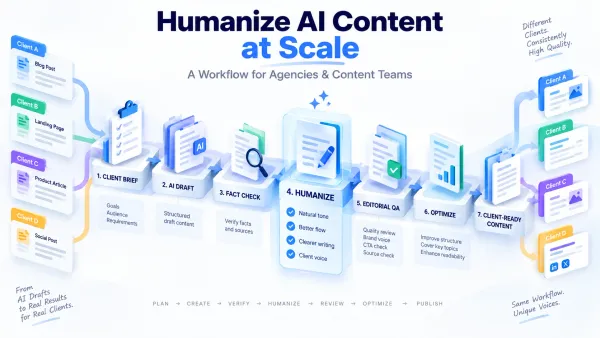
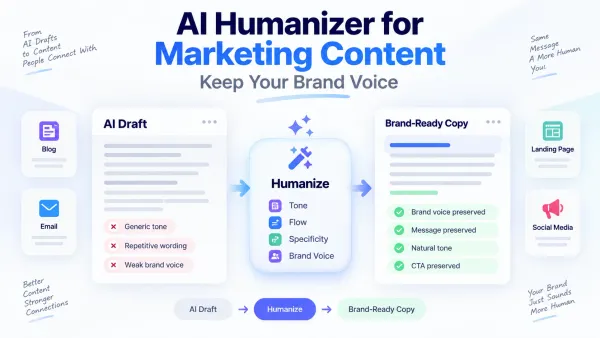
If you want your content to both read like your brand's actual voice and hold up structurally for AI search citation, answer-first sections, clean extractable capsules, original framing instead of generic AI phrasing, that's the specific overlap HumanizeAI is built for: humanization for brand-voice matching, content creation support, and AEO/GEO structuring in one workflow. That overlap, structure that reads clean and a voice that reads real, is worth building for on purpose. It doesn't happen by accident, and it definitely doesn't happen by running a draft through a detector-evasion pass and hoping.
Try the AI Article Agent | See Pricing Free plan available · No credit card required
Additional Resources
- How to Humanize AI Text: The Complete Marketer's Guide
- What Makes a Page Citable to AI? The 7 Structural Markers
- Citability Is Not a Checklist
- Is It Ethical and Legal to Humanize AI-Generated Content?
- Answer Engine Optimization: The Marketer's Playbook
About the Author
Steve Palomares has spent 25+ years building software companies. Now owner of HumanizeAI, he writes about AI content strategy for marketing, AEO, GEO and growing software businesses with AI. Based in North Texas.