23 AI Words That Actually Signal AI Writing (Not 407)
Every AI word list is an assertion. This one is a measurement. We computed the excess frequency ratio for all 407 style words in the source dataset behind the leading study, and most of the words on popular lists do not survive it.


AI-generated writing can develop a recognizable style. Certain words, phrases, transitions, and sentence patterns appear repeatedly in unedited output from tools such as ChatGPT, Claude, and Gemini.
That does not mean words like delve, pivotal, nuanced, or landscape belong exclusively to AI. Humans used all of them long before modern language models existed. What matters is context: repetition, density, generic phrasing, predictable sentence structure, and whether the language actually adds meaning.
Recent research supports that distinction. A 2025 Science Advances study examined more than 15 million PubMed abstracts and found an abrupt increase in hundreds of stylistic words after ChatGPT-like tools became widely available. But the researchers explicitly note that this is a corpus-level signal and cannot identify whether any individual document was written or edited with an LLM.
Quick Answer
Common AI-associated words include delve, intricate, pivotal, underscore, enhance, foster, nuanced, landscape, tapestry, showcase, and crucial. Common AI phrases include “it is important to note,” “in today’s fast-paced world,” “shed light on,” “delve deeper into,” and “play a significant role.”
These words can appear naturally in human writing, so none of them proves that a passage is AI-generated. They are most useful as editing signals when several appear repeatedly alongside generic language, uniform sentence structure, or vague claims. Wikipedia’s current AI-writing field guide makes the same caution: individual indicators are observations, not proof of authorship.
Key Takeaways
- Some stylistic words became measurably more frequent in scientific writing after widespread LLM adoption, including words associated with polished or formal prose.
- A single “AI word” does not prove that AI wrote a document.
- Phrases and patterns are often more informative than isolated vocabulary.
- Removing every flagged word can make writing flatter rather than more human.
- The better editing goal is to replace vague language with specific facts, examples, judgment, and a voice appropriate for the reader.
What Are “Common AI Words”?
“Common AI words” are words that appear unusually often or noticeably in some AI-generated or AI-assisted writing.
The term does not describe a formal dictionary of banned vocabulary. It is better understood as a group of stylistic tendencies.
Wikipedia’s community-maintained Signs of AI Writing guide, for example, identifies a high density of words including additionally, crucial, delve, enhance, fostering, interplay, intricate, meticulous, pivotal, robust, showcase, tapestry, testament, and underscore as one possible pattern in AI-assisted prose. The guide simultaneously warns that these words also occur naturally in human writing and should not be used as standalone proof.
Research gives the idea stronger empirical support at the population level. Kobak and colleagues found hundreds of “excess words” in 2024 biomedical abstracts, with the increase dominated by stylistic verbs and adjectives rather than topic-specific vocabulary. Their analysis included forms such as delve and intricate, but the authors stress that their method measures changes across millions of documents rather than diagnosing individual texts.
Common AI Words: A Practical List
The table below combines words already present in this article with terms that recur in current research and editorial guides. Treat it as an editing checklist, not an AI detector.
The lesson is not that these words are “bad.” Many are perfectly appropriate when they are the clearest word for the job. The problem starts when several appear in a short passage and substitute for evidence or precision.
More AI-Associated Words to Review
Other words from the existing article that are worth reviewing in context include underpinnings, treasure trove, amplify, facilitate, encompass, unravel, pertinent, empower, profound, resonate, insights, relentless, conceptualize, complementary, discern, integral, invaluable, critique, complexity, significant, unleash, valuable, enlightening, recognize, characterized, offerings, systemic, elucidate, esteem, cognizant, and endeavour.
Some of these are ordinary English words. Their presence is not suspicious on its own.
For example:
“The survey provided valuable insights into customer preferences.”
There is nothing inherently wrong with that sentence. But if the article repeatedly says valuable insights, key insights, actionable insights, and profound insights without telling the reader what any of those insights actually are, the problem is specificity—not the word insights itself.
Common AI Phrases and Why They Sound Formulaic
Phrases are often more useful editing clues because they reflect an entire rhetorical pattern rather than a single vocabulary choice.
“It is important to note that”
This phrase announces importance instead of demonstrating it.
Instead of:
It is important to note that customer retention declined in Q3.
Prefer:
Customer retention fell in Q3 after the annual-plan renewal cycle ended.
The second version gives the reader information rather than telling them how important the information is.
“In today’s fast-paced world”
This is generic scene-setting. It can be attached to almost any topic without changing the meaning.
Instead of:
In today’s fast-paced world, companies need efficient software.
Prefer:
Teams handling hundreds of support requests each day need software that reduces repetitive work.
“Delve deeper into”
This often introduces analysis without describing what will actually be analyzed.
Instead of:
Let’s delve deeper into customer behavior.
Prefer:
Next, compare repeat purchases by acquisition channel.
“Shed light on”
This is often a polished way of saying that evidence explains something.
Instead of:
The survey sheds light on why customers leave.
Prefer:
The survey found that price and slow onboarding were the two most frequently cited reasons for cancellation.
“Play a significant role in shaping”
This phrase can turn a simple relationship into a long abstraction.
Instead of:
Pricing plays a significant role in shaping customer decisions.
Prefer:
Pricing affects whether customers upgrade, downgrade, or leave.
“Gain valuable insights”
The problem is usually not the phrase itself but the missing information.
Instead of:
Analytics helps teams gain valuable insights.
Prefer:
Analytics shows which landing pages attract qualified leads and which lose users before conversion.
“In the realm of”
This phrase often adds formality without improving meaning.
Instead of:
In the realm of content marketing, trust is important.
Prefer:
In content marketing, trust depends on whether readers can verify your claims.
“Highlighting the need”
This phrase frequently appears when the writer could simply state the implication.
Instead of:
The results highlight the need for better onboarding.
Prefer:
The results suggest that the onboarding flow needs fewer steps and clearer instructions.
“A nuanced understanding of”
If an issue is genuinely nuanced, show the nuance.
Instead of:
A nuanced understanding of AI detection is necessary.
Prefer:
AI detectors can produce false positives and false negatives, so a score should be interpreted alongside the text, context, and other evidence.
“A testament to”
This is another common emphasis formula.
Instead of:
The company's growth is a testament to its strategy.
Prefer:
Revenue increased after the company moved from annual launches to monthly product updates.
Other phrases from the original article that are worth reviewing include “objective of the study,” “study aims to explore,” “research is needed to understand,” “despite facing,” “expressed excitement,” “notable works include,” “adapt to changing landscapes,” “treasure trove of knowledge,” and “intricate tapestry of.”
Why Do AI Writing Tools Reuse Certain Words?
Large language models generate text from patterns learned from large collections of existing language. Their outputs are influenced by training data, model design, fine-tuning, prompts, and the surrounding conversation.
That makes some polished, broadly applicable phrases useful defaults.
A phrase such as “it is important to note” works in thousands of contexts. So do verbs like enhance, underscore, and foster. They sound grammatical and professional while requiring relatively little subject-specific detail.
That does not mean every model produces the same style. Model behavior changes over time, and different systems can have very different linguistic habits. Wikipedia’s guide specifically notes that patterns vary between LLMs and that some older indicators have already become less common in newer systems.
Do These Words Prove That Text Was Written by AI?
No.
This is the most important point in the article.
Words such as delve, pivotal, crucial, tapestry, or nuanced existed long before ChatGPT. A human can use them naturally. An AI model can also produce a passage without using any of them.
The 2025 Science Advances study found real vocabulary shifts across more than 15 million biomedical abstracts, but the researchers explicitly say their method cannot identify whether an individual abstract was processed by an LLM.
Wikipedia provides a similar warning: its field guide is descriptive rather than prescriptive, and individual signs should not be treated as proof of AI authorship.
Even automated AI detection has limitations. OpenAI discontinued its own text classifier in 2023 because of its low accuracy and warned against using such classifiers as the primary basis for consequential decisions.
So an “AI words list” should be used to review writing quality, not to accuse a writer or prove authorship.
How to Fix AI-Sounding Words Without Making the Writing Worse
The goal is not to run through a blacklist and replace every formal word with a simpler synonym.
Step 1 — Find repeated stock language
Look for words and phrases that appear repeatedly, particularly abstract terms such as crucial, enhance, leverage, landscape, or valuable insights.
Step 2 — Ask whether the phrase adds information
If removing the phrase leaves the sentence almost unchanged, it may be filler.
For example:
It is important to note that the campaign generated 340 leads.
becomes:
The campaign generated 340 leads.
Nothing was lost.
Step 3 — Replace vague claims with specific information
Do not simply replace pivotal with important.
Explain why the event mattered.
Instead of:
The new pricing model was pivotal.
Write:
The new pricing model increased trial-to-paid conversion after the free tier was reduced from three projects to one.
Step 4 — Add evidence, examples, or experience
Generic AI drafts often become more useful when you add information that could only come from the actual topic: a test result, customer example, quote, limitation, screenshot, process detail, or first-hand observation.
Step 5 — Vary sentence rhythm naturally
Do not force every paragraph into identical sentence lengths and structures. Read the passage aloud and edit where the rhythm feels overly uniform.
Step 6 — Recheck meaning and factual accuracy
A rewrite is only better if it keeps the correct facts, nuance, citations, terminology, and intent.
If the whole draft needs this type of editing, a dedicated AI Humanizer can help with sentence variation, tone, and flow before the final human review. For a manual workflow, see our guide on how to humanize AI text.
Common AI Words Are Signals, Not a Style Guide
The worst way to use a list like this is to turn it into a set of forbidden words.
If nuanced is the correct word, use it.
If a landscape really is the subject, there is no reason to avoid the word.
And if delve appears once in a 3,000-word article, replacing it will not magically make the article more human.
What matters more is whether the writing contains specific information, credible sources, original reasoning, useful examples, and a voice that makes sense for the audience.
Google's current guidance follows the same broader principle: it recommends helpful, reliable, people-first content and explicitly says that AI-generated content is not automatically against its guidelines. The concern is low-value or scaled content created primarily to manipulate rankings, not the presence of any particular word.
If you want a deeper breakdown of the broader structural patterns—not just vocabulary—see our guide to Wikipedia's signs of AI writing.
Frequently Asked Questions
What are the most common AI words?
Words frequently associated with AI-generated writing include delve, intricate, pivotal, underscore, enhance, foster, nuanced, landscape, tapestry, showcase, and crucial. Research has found measurable post-ChatGPT increases in stylistic vocabulary across large corpora, but no single word proves that an individual passage was AI-written.
What are common AI phrases?
Commonly discussed patterns include “it is important to note,” “in today's fast-paced world,” “delve deeper into,” “shed light on,” “gain valuable insights,” “play a significant role,” and “a testament to.” These phrases also appear in ordinary human writing, so their usefulness is primarily as editing signals.
Why does AI use words like “delve” and “tapestry”?
Language models learn statistical patterns from large amounts of text and are fine-tuned to produce coherent, useful responses. Certain polished or broadly applicable words can become disproportionately common in particular models or time periods. Corpus research has documented post-ChatGPT increases in several stylistic terms, but those patterns change as models evolve.
Does using common AI words mean a text was generated by AI?
No. Individual words and phrases are not reliable evidence of authorship. Humans use the same vocabulary, and different AI models have different stylistic habits. Even Wikipedia's field guide warns that its indicators should be interpreted together and in context rather than treated as proof.
Can changing AI words help writing sound more natural?
Sometimes, but simple synonym swapping is usually not enough. A stronger edit replaces vague language with specific facts, examples, clearer verbs, varied sentence structure, and real perspective.
Can common AI words cause content to rank poorly on Google?
There is no Google rule penalizing words such as delve, pivotal, or tapestry. Google's published guidance focuses on whether content is original, useful, reliable, and created primarily for people rather than whether AI was involved in producing it.
Should I remove every phrase that sounds AI-generated?
No. Treat these patterns as prompts for review. Remove or rewrite a phrase when it is repetitive, vague, inflated, or unnecessary. Keep it when it is accurate, natural for the context, and the clearest way to express the idea.
Sources and Further Reading
Kobak, D., González-Márquez, R., Horvát, E.-Á., & Lause, J. “Delving into LLM-assisted writing in biomedical publications through excess vocabulary.” Science Advances, 2025. The study analyzes more than 15 million PubMed abstracts and documents abrupt post-LLM changes in stylistic vocabulary.
Wikipedia: Signs of AI Writing. A community-maintained field guide documenting recurring language and formatting patterns in AI-assisted text, with explicit caveats that individual indicators are not proof.
OpenAI — New AI Classifier for Indicating AI-Written Text. OpenAI retired its classifier due to low accuracy and documented important limitations of automated authorship detection.
Google Search Central — Creating Helpful, Reliable, People-First Content and Google Search's Guidance About AI-Generated Content. Google's guidance emphasizes quality and user value rather than penalizing content merely because AI was used in its production.
What I would preserve technically
Keep the same URL. Update the existing article rather than creating a new page. The current page already has topical history and Google is clearly associating it with the correct query family.
I would also keep the two existing image positions, but update the images/ALT text around the new keyword ownership:
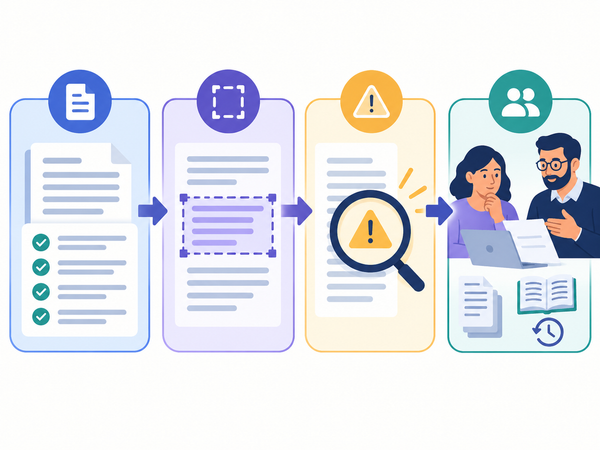
Featured image ALT: common AI words and phrases found in AI-generated writing
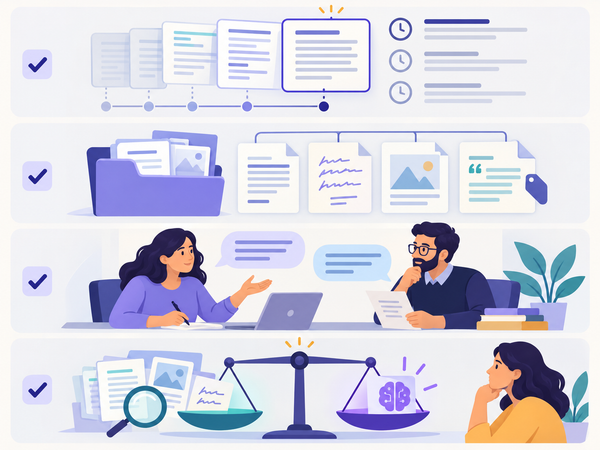
Words section ALT: examples of common AI words used in AI-generated text
Phrases section ALT: common AI phrases and examples of more specific alternatives
The biggest change here is not adding more keywords. It is turning the existing unsourced word list into a useful, evidence-backed reference page while still satisfying exactly what the GSC queries show users are looking for.